
Cruising the Mediterranean: Provisioning, Hosting Guests & Life Onboard
Jabulani’s Journey Part 4 with Lagoon 46 Owners, Mike and Linda
Taking delivery of your yacht in Europe is just the beginning of the adventure.
Suddenly you’re provisioning a floating home in another country, learning where to shop, welcoming friends and family onboard, and discovering that the little decisions you make during your first season can completely change your experience.
After four seasons exploring Europe aboard their Lagoon 46, Mike and Linda have learned that successful Mediterranean cruising comes with experience.
From provisioning their yacht in Les Sables d’Olonne before departure to discovering incredible local produce in Greece, Italy and France, they’ve refined the way they cruise every single season. Along the way, they’ve also learned valuable lessons about hosting guests onboard, choosing the right equipment upgrades, and making life at sea simpler and more enjoyable.
In this guide, they share the practical tips they wish they’d known from day one, helping anyone buying a yacht in Europe or planning on cruising the Mediterranean start their own adventure with confidence.
Provisioning Your Yacht in Les Sables d’Olonne
For many Lagoon owners, European Delivery is the beginning of an incredible adventure. But before setting sail for the Mediterranean, there’s one important step that shouldn’t be rushed, provisioning your yacht.
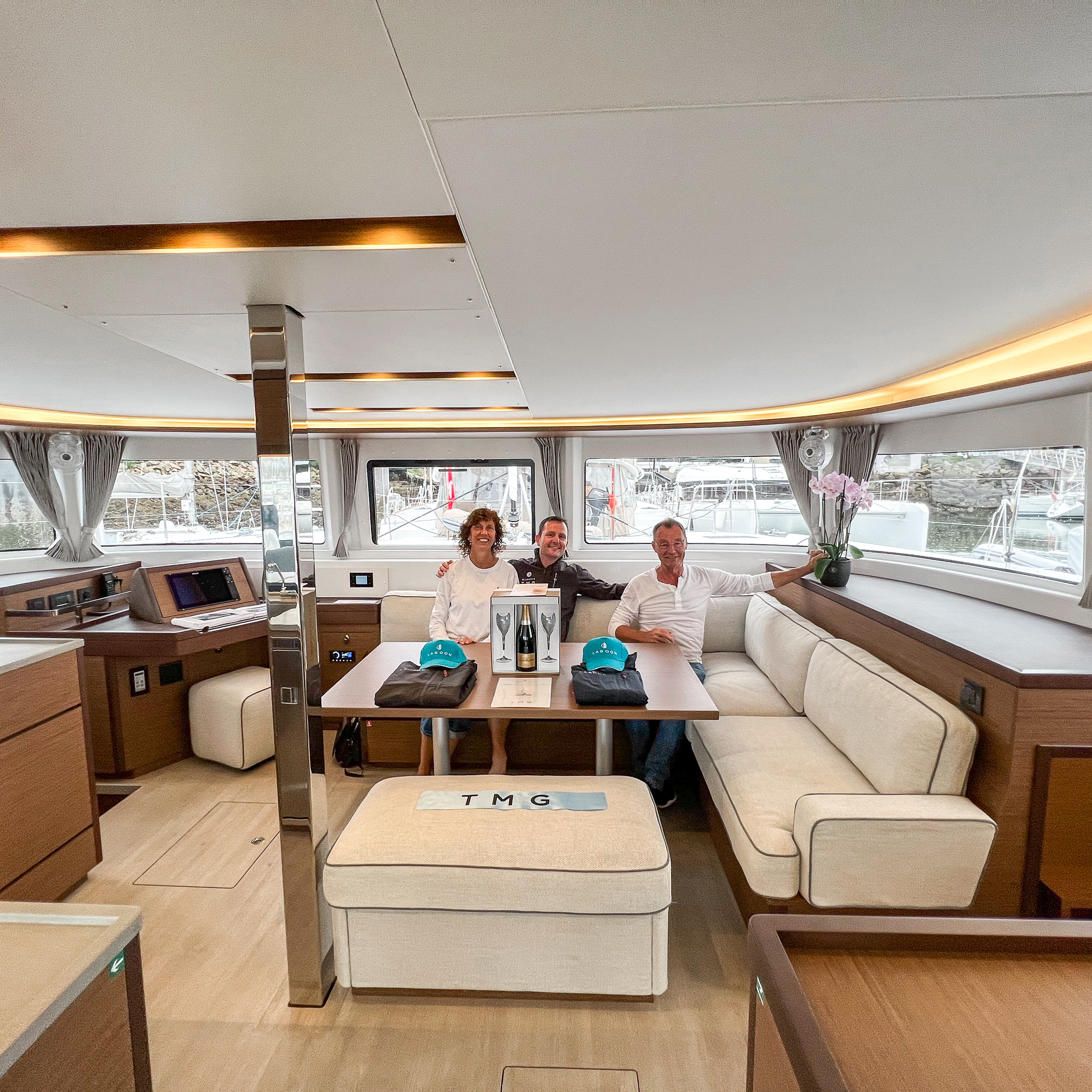
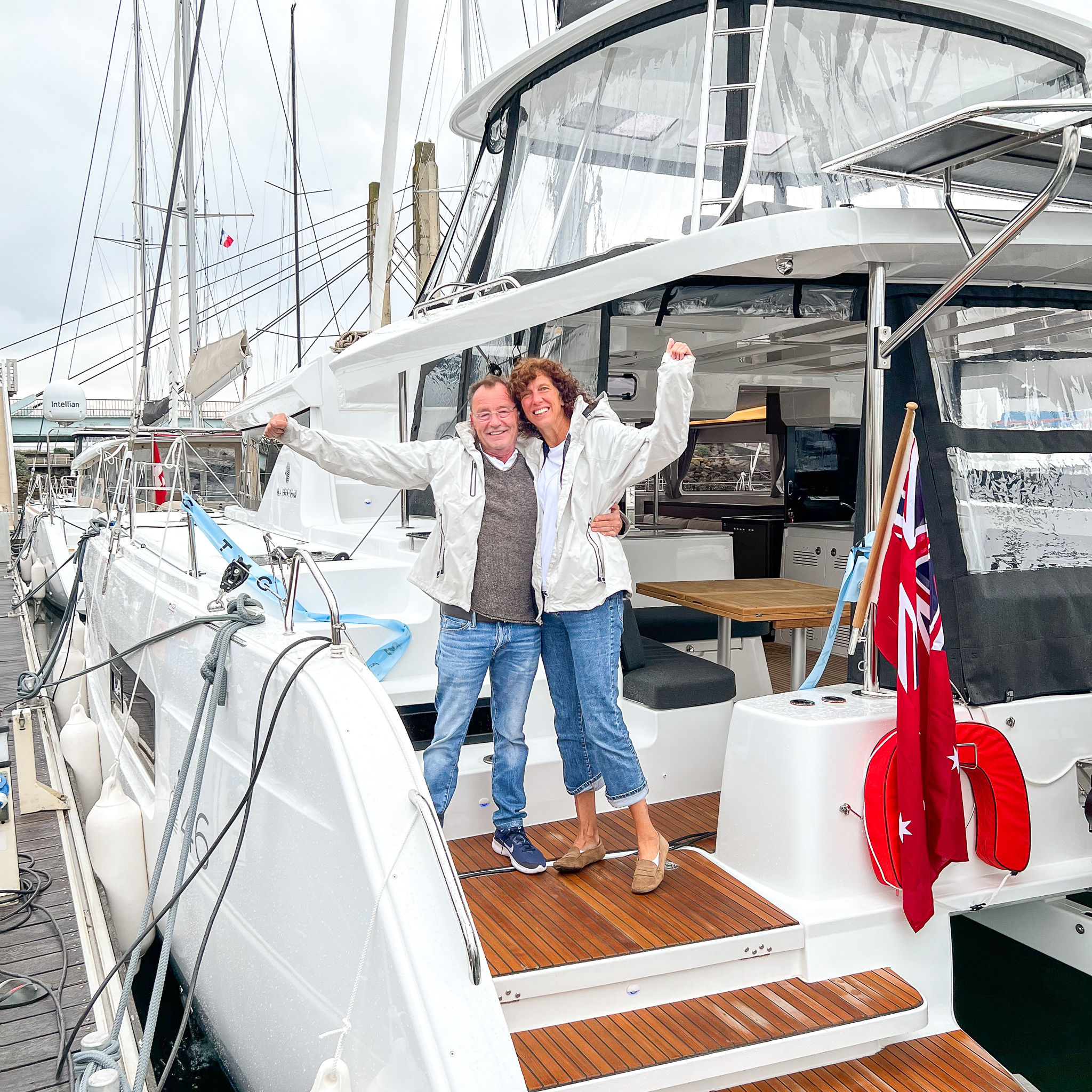
When Mike and Linda took delivery of their Lagoon 46 in Les Sables d’Olonne, France, they quickly realised they weren’t simply stocking a boat. They were setting up an entire home that would carry them through months of cruising the Mediterranean.
“You’re fitting out a house in a foreign language,” Linda explains. “Everything is there, your bed linen, your crockery, your everything. But it does take time.”
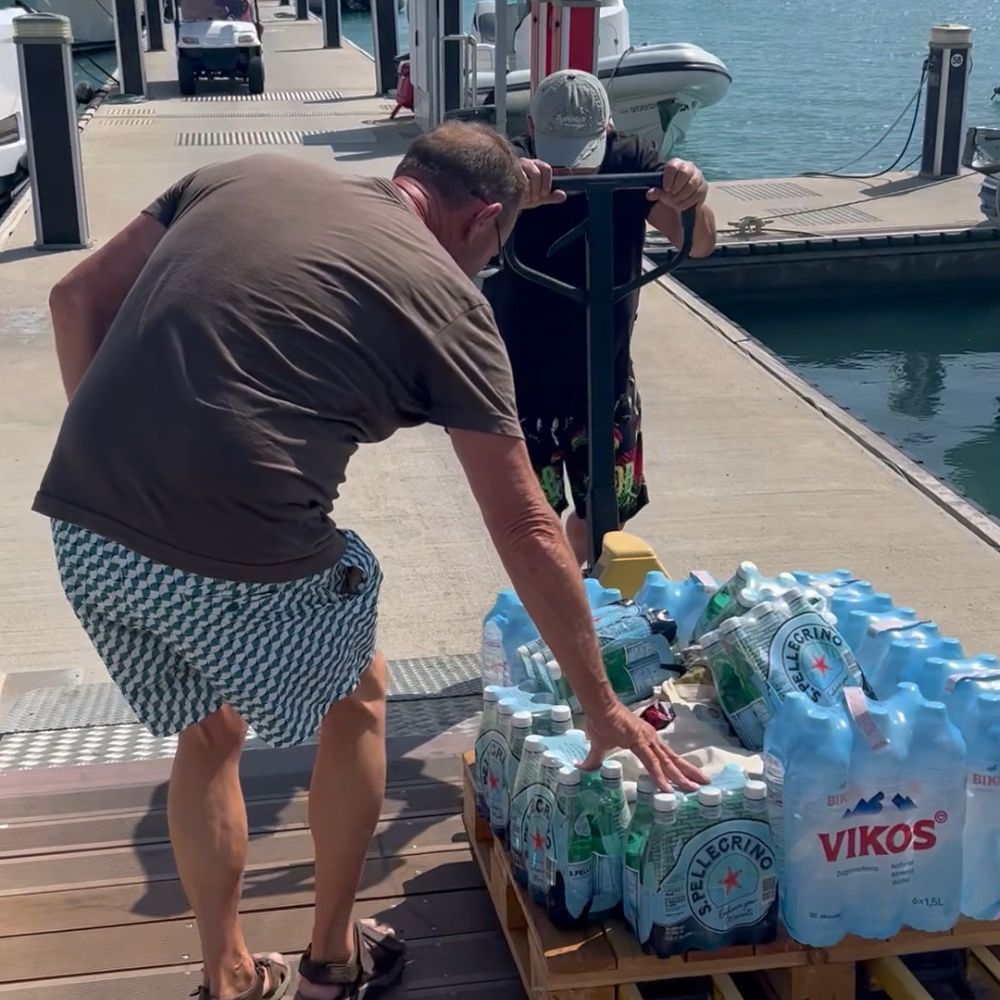
It’s easy to underestimate just how much needs to be organised before leaving the dock. Beyond food and drinks, you’re purchasing everything that makes a yacht feel like home, from bedding, towels and kitchenware to cleaning supplies, pantry staples and everyday essentials. Allowing enough time means you can enjoy the process rather than rushing from shop to shop before your departure.
Everything You Need Is Already There
The good news is that Mike and Linda found it surprisingly easy to source everything they needed in Les Sables d’Olonne.
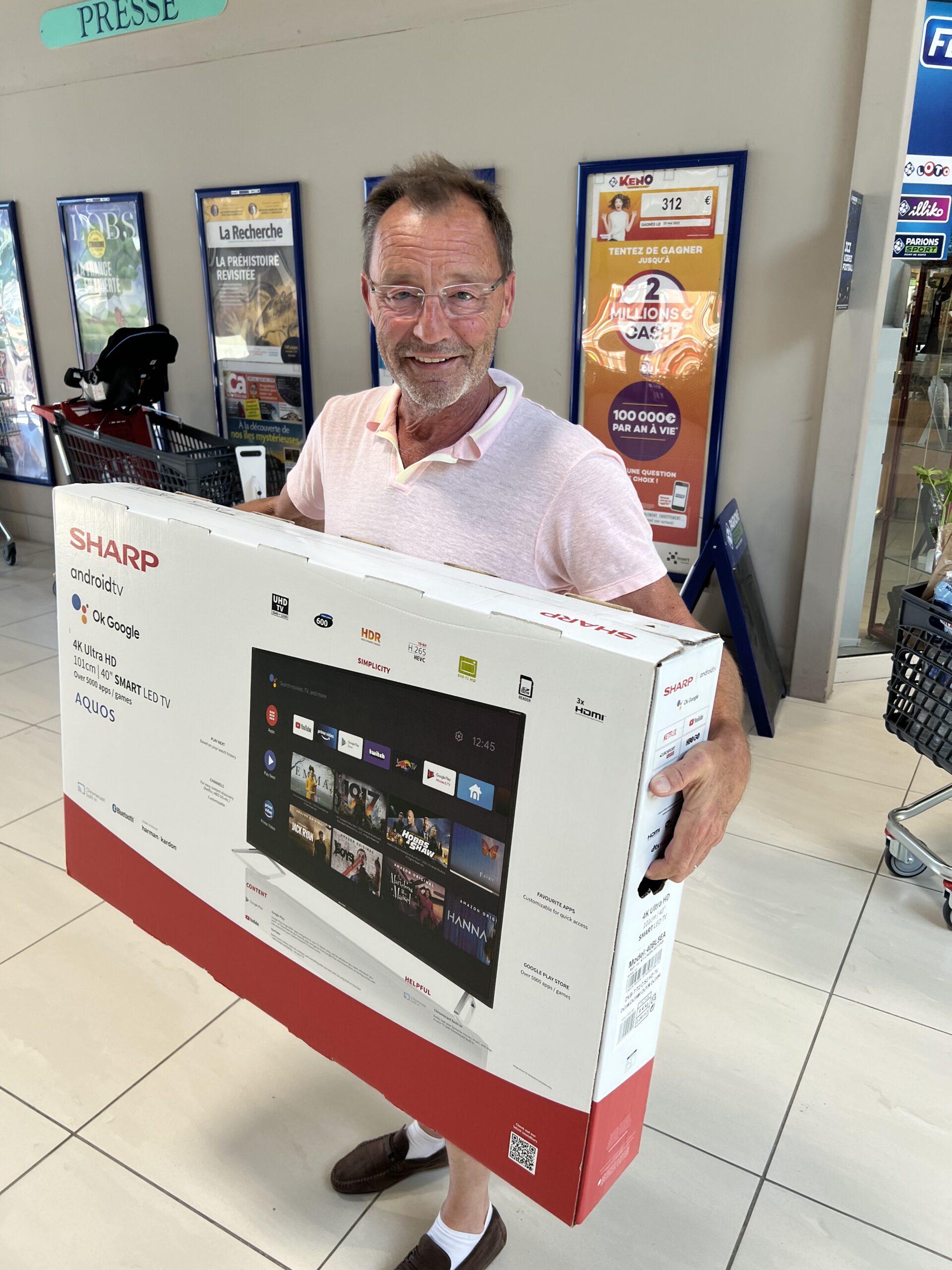
From supermarkets and department stores to homeware shops and marine suppliers, the town offered everything required to outfit their Lagoon before departing. Rather than trying to ship household items from Australia, they discovered it was far easier, and often more enjoyable, to purchase them locally.
Their advice is reassuring for anyone buying a yacht in Europe. Don’t feel pressured to arrive with suitcases full of supplies. Instead, allow yourself the time to explore, shop locally and enjoy the excitement of preparing your yacht for the journey ahead.
You’re Not Provisioning for an Ocean Crossing
One of the biggest misconceptions about cruising the Mediterranean is that you need to stock your yacht as though you’re preparing for weeks at sea.
After all, when you’re living aboard for months at a time, it’s easy to assume every locker should be filled before you leave the dock.
Mike and Linda quickly discovered the opposite was true.
Looking back on their first season, they admit they significantly over-provisioned. Their refrigerator was packed from day one, making it difficult to find anything buried underneath the supplies. In hindsight, they realised there was simply no need to carry so much food onboard.
The Mediterranean is incredibly well serviced, with supermarkets, local markets and specialty food stores rarely more than a few days away. Instead of treating each provisioning stop as your last opportunity to stock up, it becomes part of the cruising experience.
“You’re not provisioning as though you’re crossing the Atlantic,” Mike explains. “It’s really quite easy in the Med.”
That single lesson completely changed the way they approached life onboard. Rather than filling every cupboard before departure, they learned to embrace shopping locally as they travelled from destination to destination.
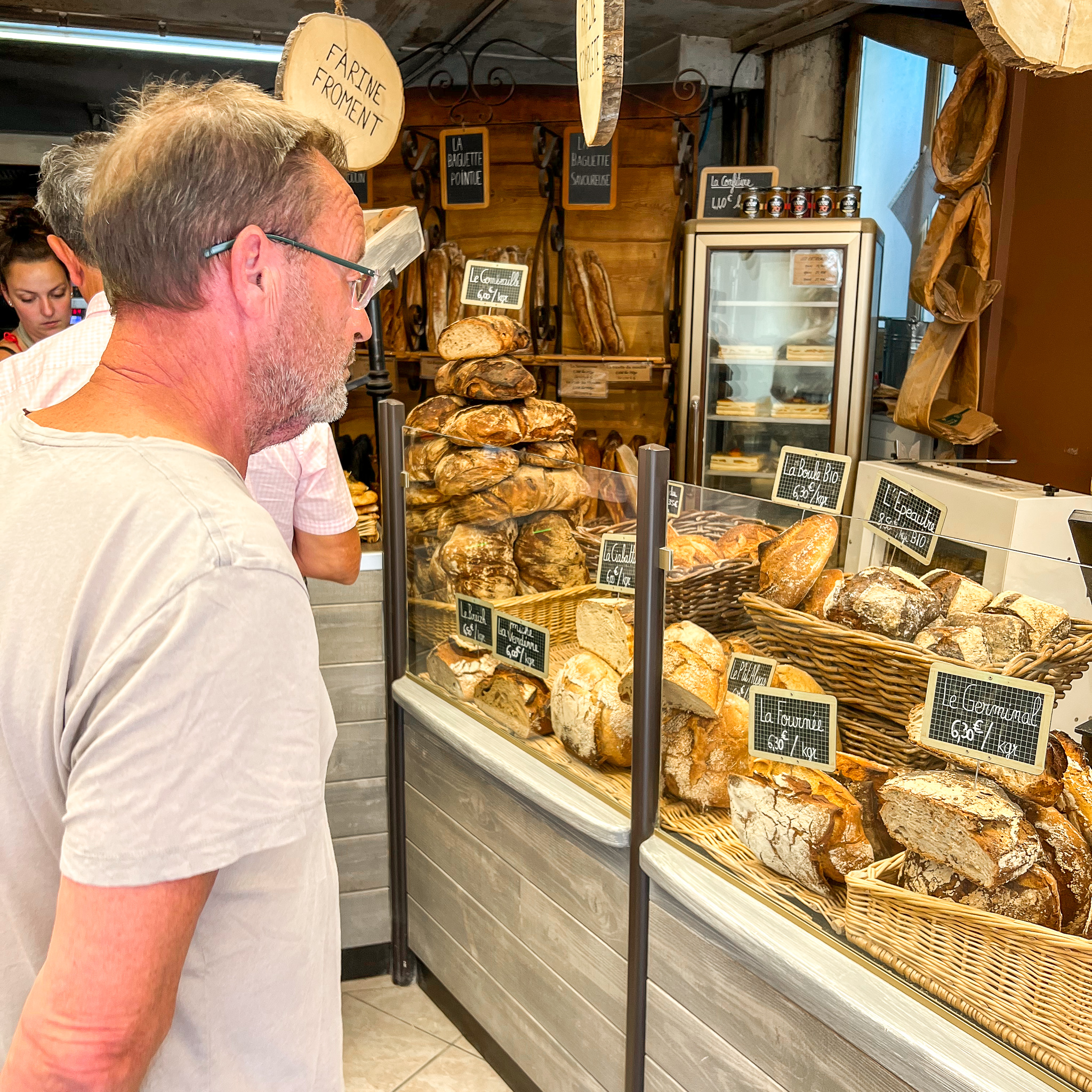
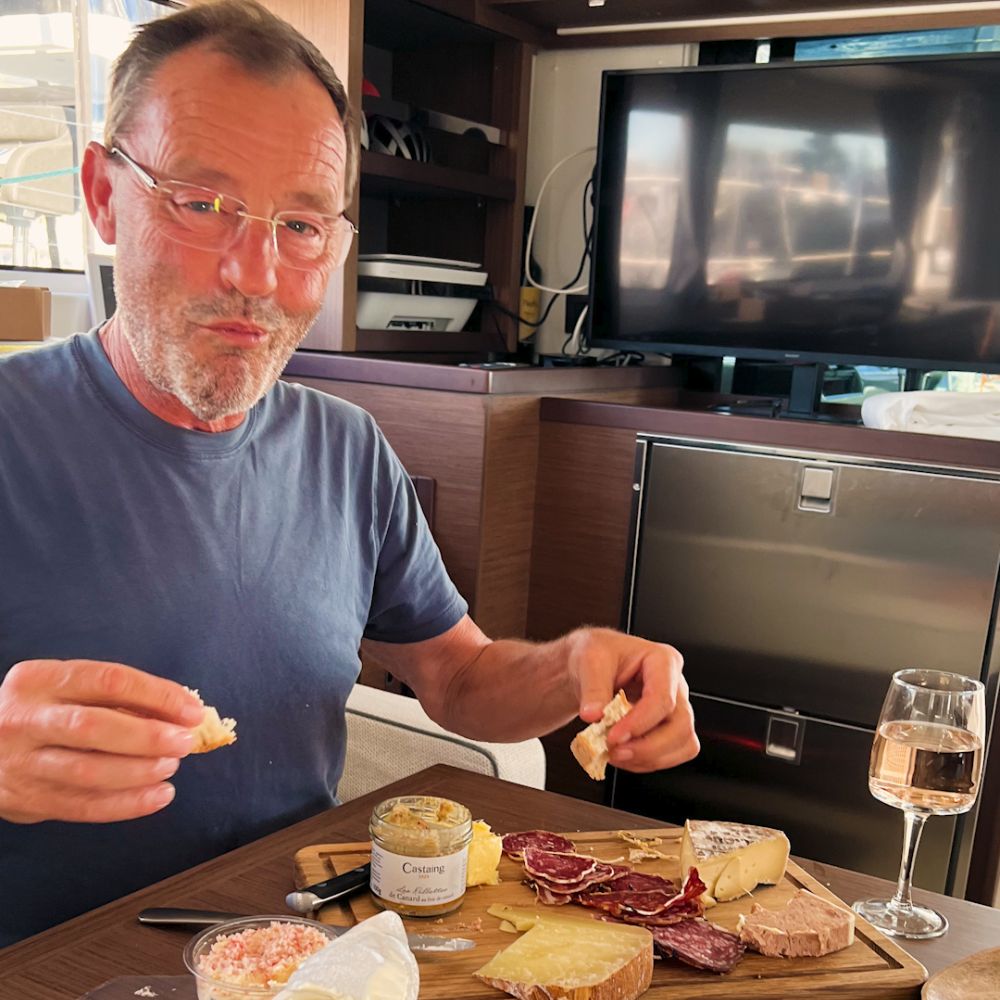
One week might mean discovering an incredible butcher in the medieval Greek town of Monemvasia, while the next could be fresh produce from an Italian market, warm bread from a French bakery or regional delicacies in a small Spanish village. Every country offers something unique, and that’s part of what makes cruising the Mediterranean so rewarding.
“It’s a lot of fun as you go from country to country,” Linda says. “French, Italian, Spanish, Greek, you’re amongst it the whole time.”
Carry the Essentials, Buy the Rest
That doesn’t mean you should leave the dock empty handed.
Mike and Linda recommend keeping a selection of pantry staples onboard, ingredients that can easily be turned into a simple meal if you’re anchored somewhere more remote or decide to stay an extra night in a secluded bay.
Pasta, rice, canned goods, sauces, herbs and other long-life ingredients became their dependable backup plan. Everything else could be purchased as they cruised, allowing them to enjoy fresher ingredients while freeing up valuable storage space onboard.
Hosting Guests Aboard Your Yacht
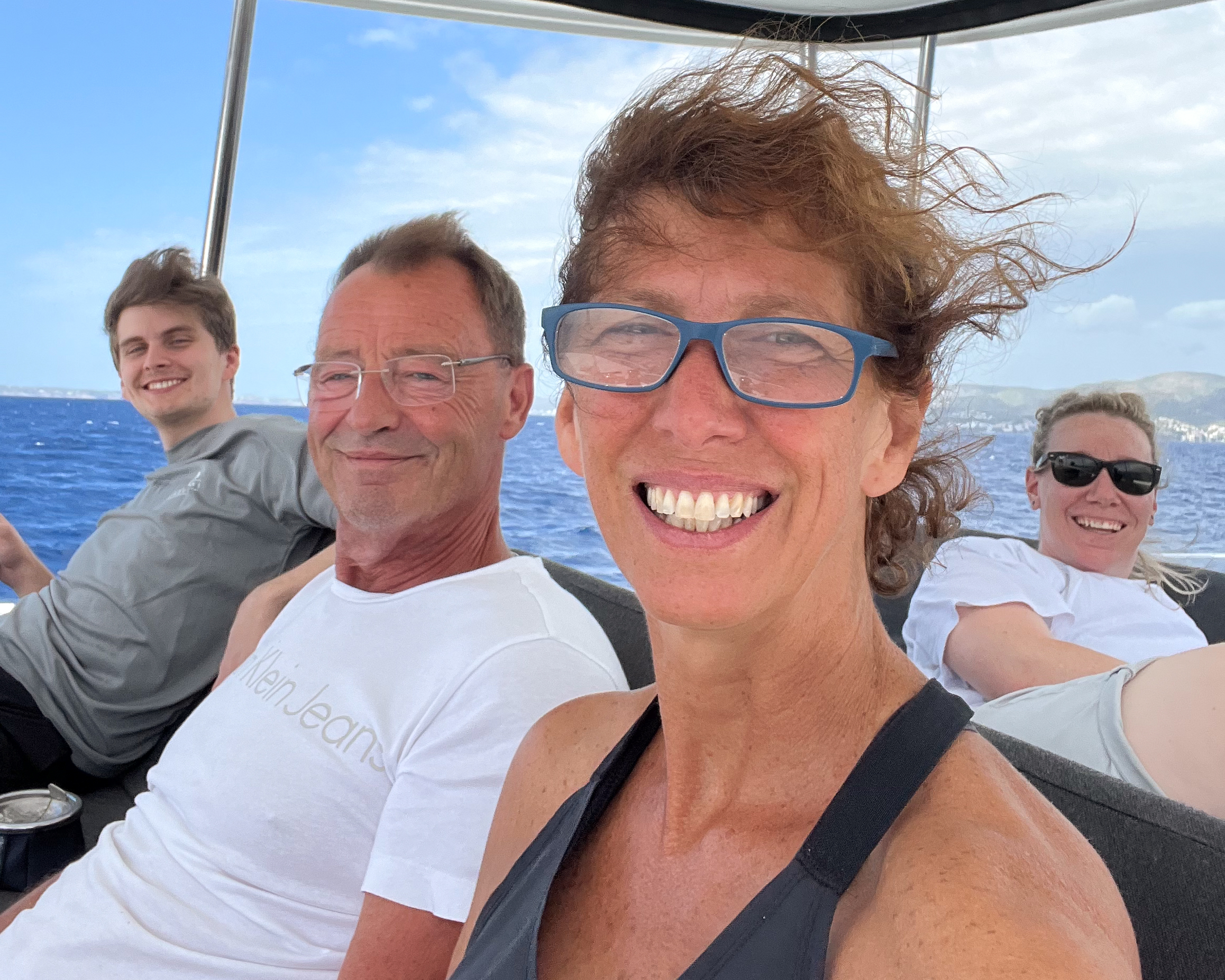
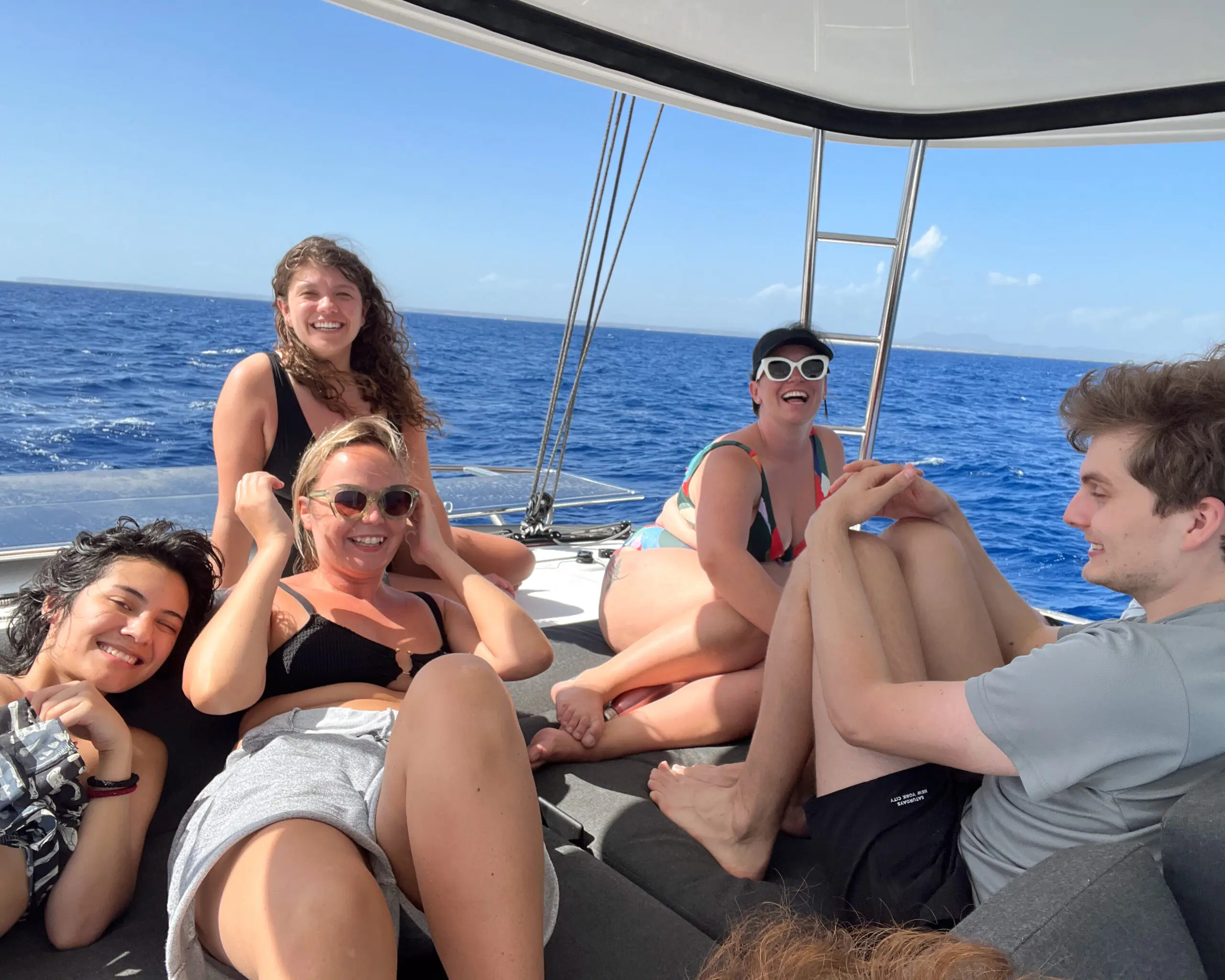
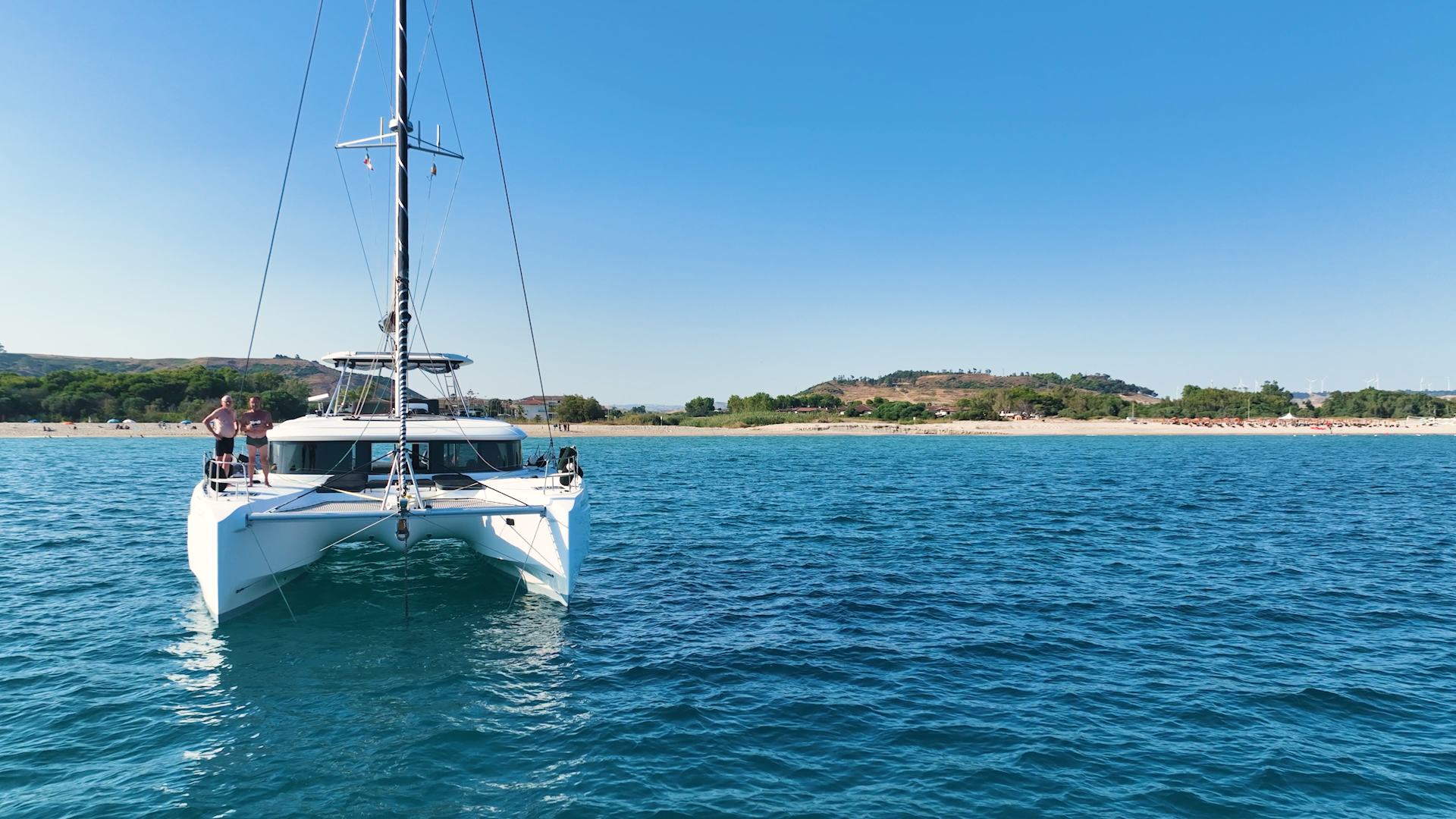
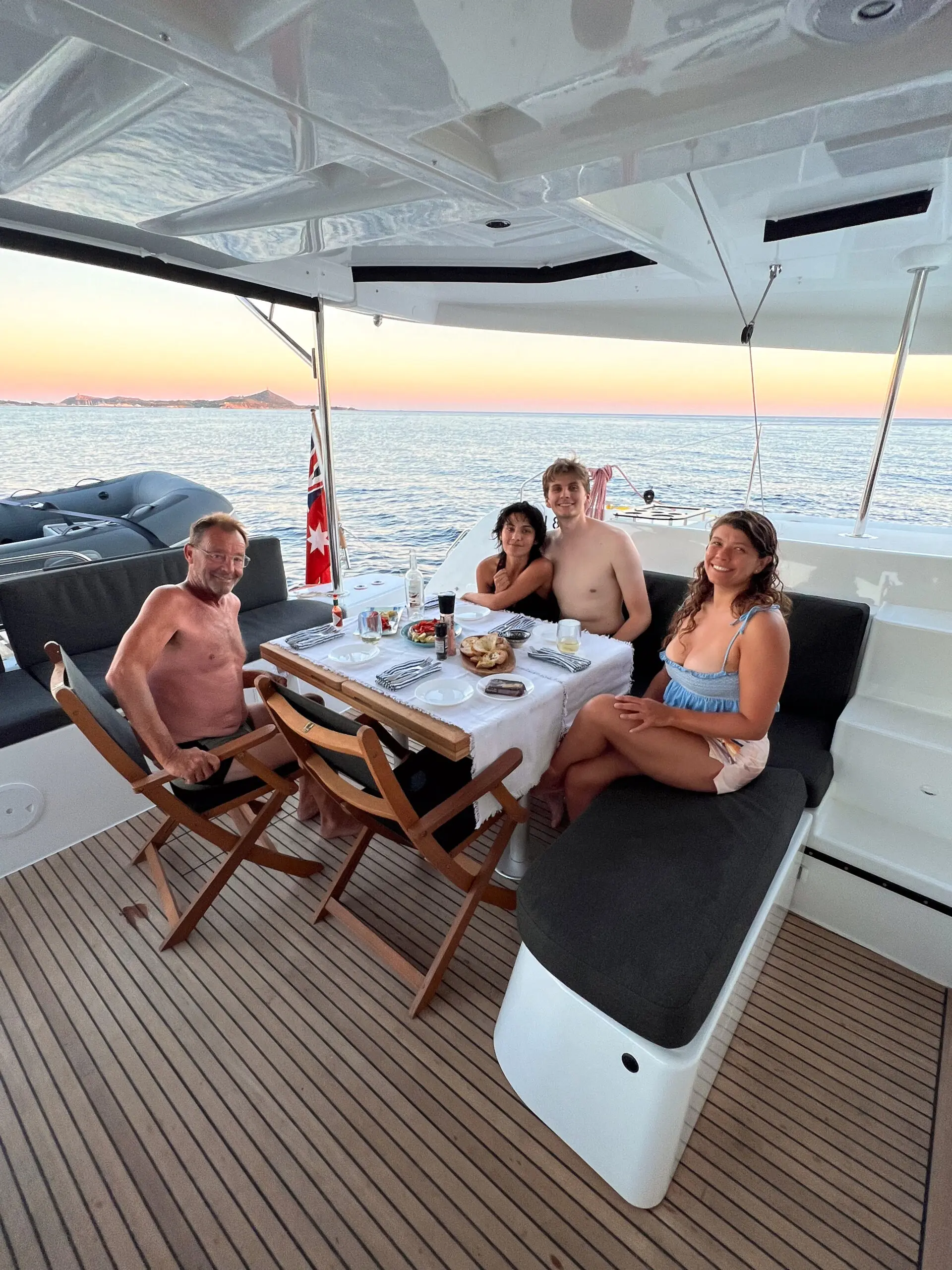
One of the greatest joys of cruising the Mediterranean is sharing the experience with family and friends. Whether it’s introducing someone to life at anchor for the first time or enjoying sunset drinks together in a secluded bay, welcoming guests onboard creates some of the most memorable moments of every cruising season.
After four seasons aboard their Lagoon 46, Mike and Linda have welcomed countless guests. Along the way, they’ve learned that while hosting is incredibly rewarding, it also requires a little planning and a willingness to let the weather dictate the schedule.
Let the Weather Lead the Itinerary
In their early seasons, Mike and Linda would confidently tell guests exactly where they would be waiting.
It didn’t take long to realise that sailing doesn’t always work that way.
The wind, sea conditions and weather forecasts often influence where you’ll anchor each night, making it difficult to promise a specific marina or town weeks in advance. Instead, they now give guests a general cruising area and confirm the exact meeting point only a few days before arrival.
“Weather dependent” has become one of the most important phrases they use when planning guest visits.
Not only does this reduce unnecessary stress for everyone onboard, it also allows them to make the best decisions for safety and comfort without feeling tied to a fixed schedule.
Soft Bags Make Life Much Easier
If there’s one practical tip Mike and Linda wish every guest knew before stepping onboard, it’s to leave the hard-shell suitcase at home.
Over the years they’ve watched visitors arrive with oversized wheeled luggage, despite only staying for a few days. While those suitcases work well in airports, they quickly become awkward once you’re transferring bags into a dinghy or trying to find somewhere to store them onboard.
Soft bags are far easier to carry, fit neatly into cabin lockers and take up far less space once unpacked, making life easier for both guests and hosts.
It’s a small piece of advice, but one that can make a surprisingly big difference.
You Don’t Need to Meet Guests at a Marina
One of the biggest surprises for Mike and Linda came during their first cruising season.
Initially, they assumed they always needed to book a marina whenever guests were arriving so boarding would be easier. Before long, they realised they were missing out on some of the Mediterranean’s most beautiful anchorages.
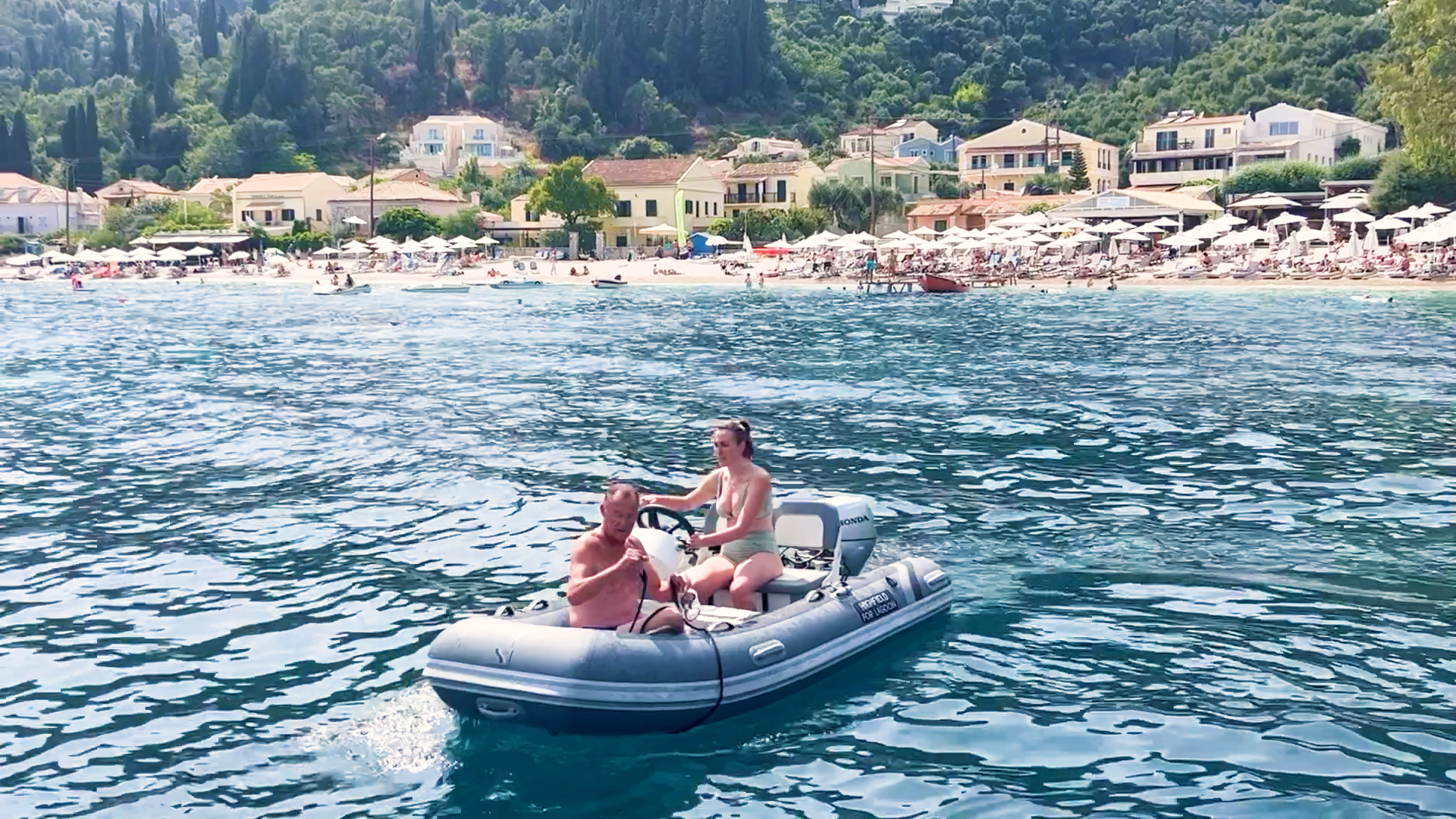
Instead, they began collecting guests by dinghy from nearby town jetties and waterfronts.
What they expected to be an inconvenience quickly became one of the highlights of the trip.
For many guests, climbing aboard a dinghy before being whisked across crystal-clear water to their floating home was their first real taste of the Mediterranean cruising lifestyle. Rather than simply stepping onto a yacht from a marina pontoon, the journey itself became part of the adventure.
Ask Guests What They Want to Experience
Perhaps Mike and Linda’s biggest lesson is that every guest arrives with different expectations.
Some dream of lively waterfront restaurants and bustling harbour towns. Others imagine waking up in a quiet bay surrounded by nothing but turquoise water.
Rather than guessing, they now ask a simple question before every visit:
What do you want to experience?
Would you like to spend time in a marina?
Would you prefer a traditional town quay?
Or is your dream to wake up anchored in a secluded bay with no one else around?
By understanding what each guest hopes to experience, Mike and Linda can tailor the itinerary accordingly. It’s a simple conversation that helps create a better experience for everyone onboard, including them!
Provisioning for Your Guests
With family and friends regularly joining them throughout the season, Mike and Linda also learned that provisioning isn’t just about stocking the yacht, it’s about stocking it for the people coming onboard.
Before each visit, Linda reaches out to guests to ask about their dietary requirements, favourite foods and any preferences they might have. Whether it’s catering for vegetarians, vegans or simply ensuring everyone’s favourite snacks and drinks are onboard, a little preparation goes a long way towards making guests feel welcome.
They’ve found that taking the time to ask these questions in advance not only makes meal planning much easier, but also helps avoid unnecessary waste. Rather than filling the fridge with food that may never be eaten, they provision specifically for the people joining them that week, while relying on local supermarkets and markets to top up supplies as they continue cruising the Mediterranean.
Your Yacht Will Evolve With Every Season
One of the biggest surprises Mike and Linda discovered after several years cruising the Mediterranean is that your yacht is never truly “finished.”
Before taking delivery, it’s easy to spend hours deciding which optional extras to include. However, after living aboard and cruising for multiple seasons, they realised the best upgrades weren’t necessarily the ones they thought they needed on day one. Instead, each season revealed small improvements that would make life onboard easier, more comfortable and more enjoyable.
“As you sail the boat for a couple of seasons, each year you go, ‘I’d love this,’ or ‘I’d love that,'” Linda explains.
Rather than trying to perfect the yacht before leaving the dock, they recommend viewing your first seasons as a learning experience. You’ll quickly discover which features you use every day, which could be improved, and where investing in an upgrade will have the greatest impact on your cruising lifestyle.
Choose Upgrades That Make Everyday Cruising Easier
After four Mediterranean seasons, Mike and Linda found that the most valuable upgrades were about making the yacht simpler to sail and easier to live aboard.
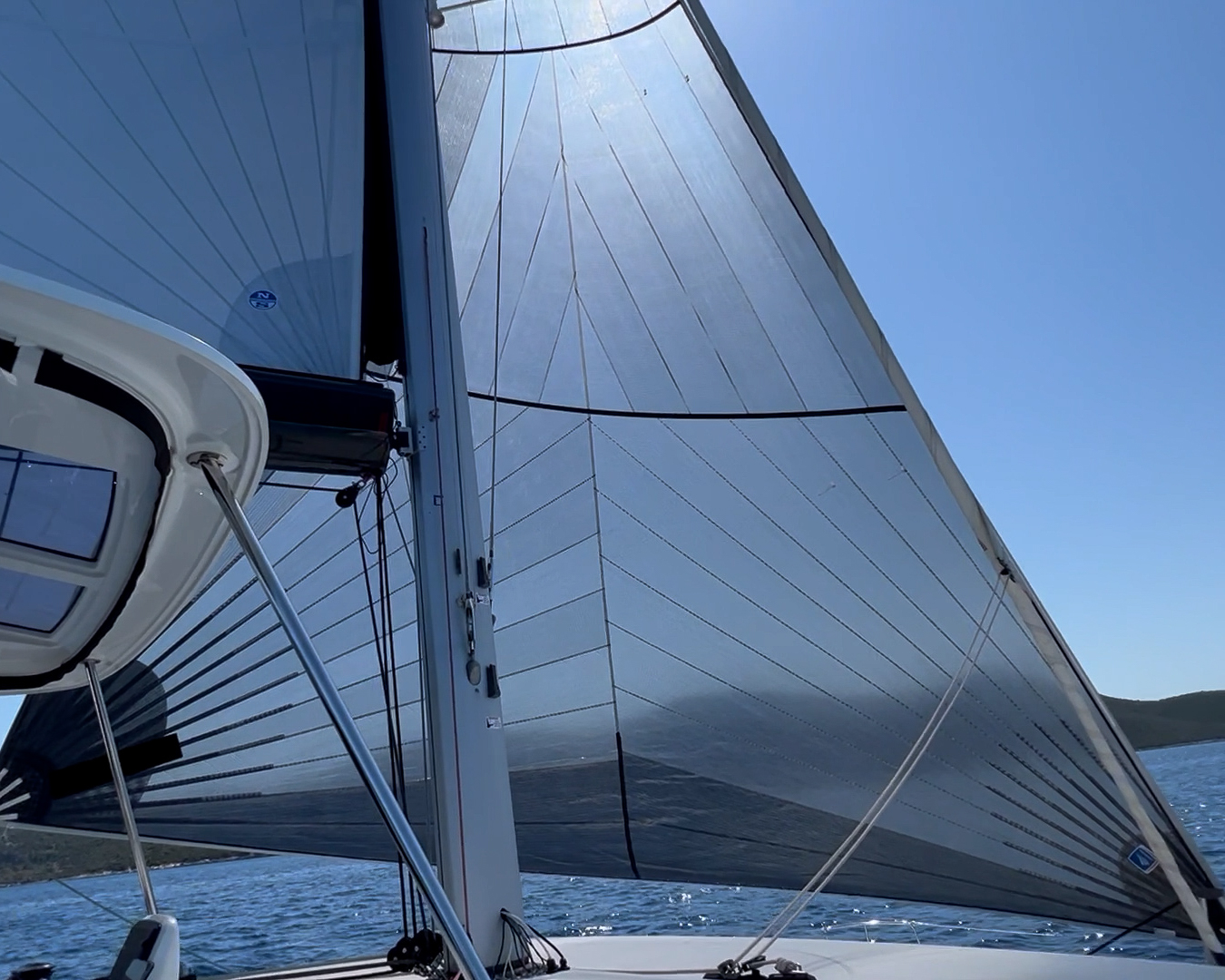
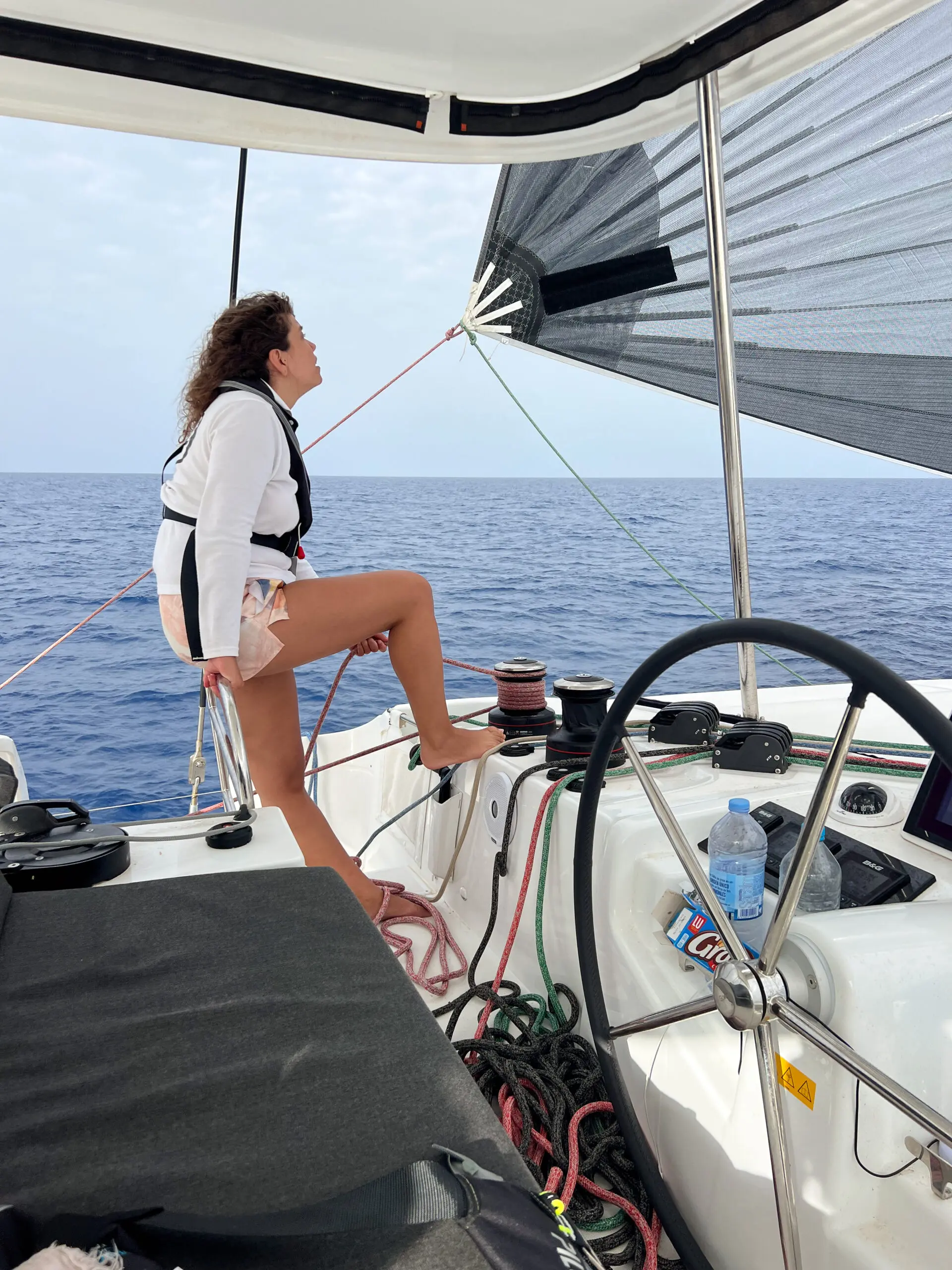
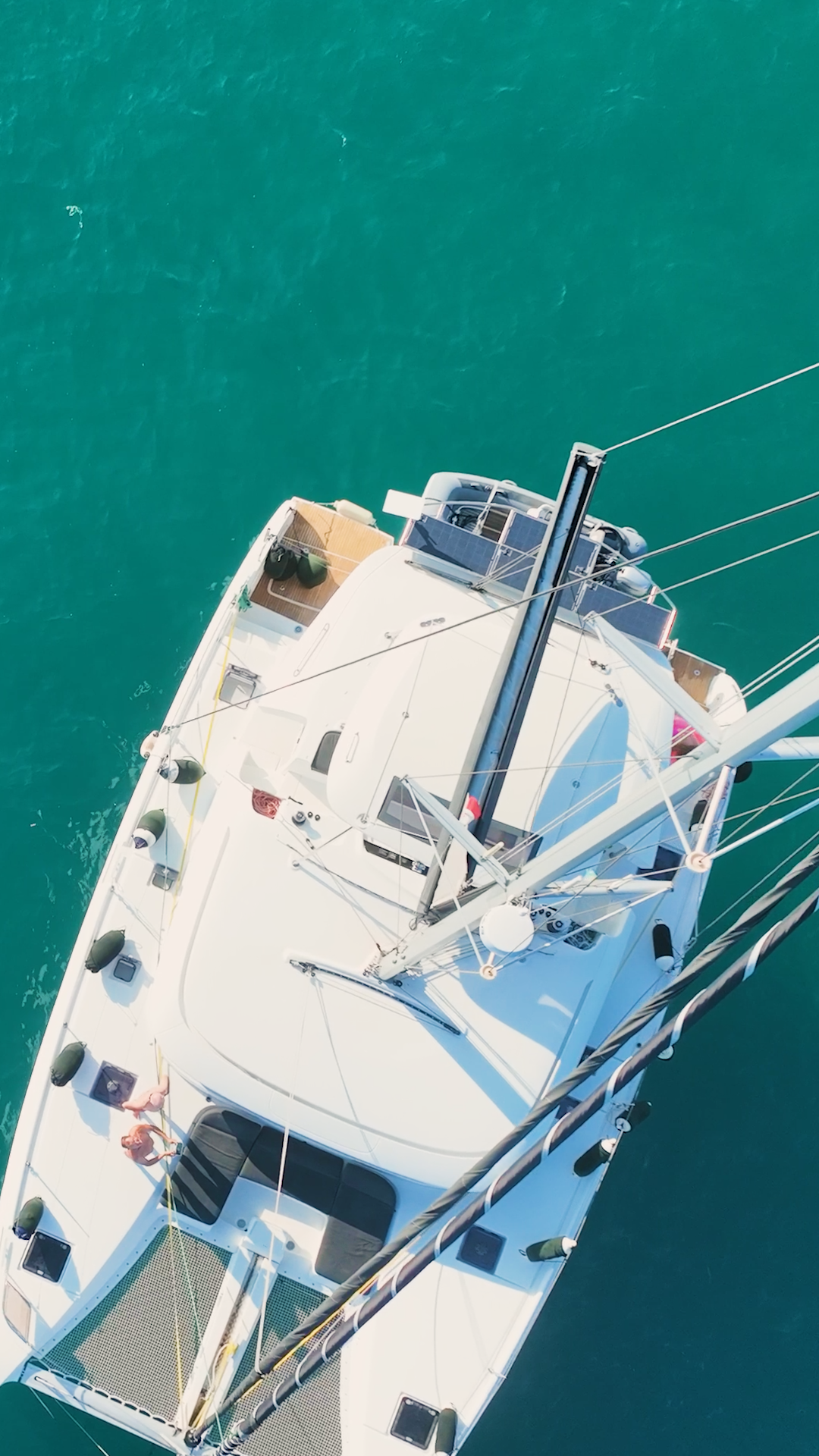
One of their favourite sails has always been the Code Zero, but originally furling it meant operating it manually. After installing an electric furler, everything changed.
“It has transformed our sailing completely,” Mike says. “We probably use the Code Zero almost as much as the jib now because it’s so easy to use.”
Another upgrade that made a significant difference was in-boom furling. Being able to hoist, reef and stow the mainsail quickly, even when sailing short-handed, made every passage less demanding and gave them greater confidence in changing conditions.
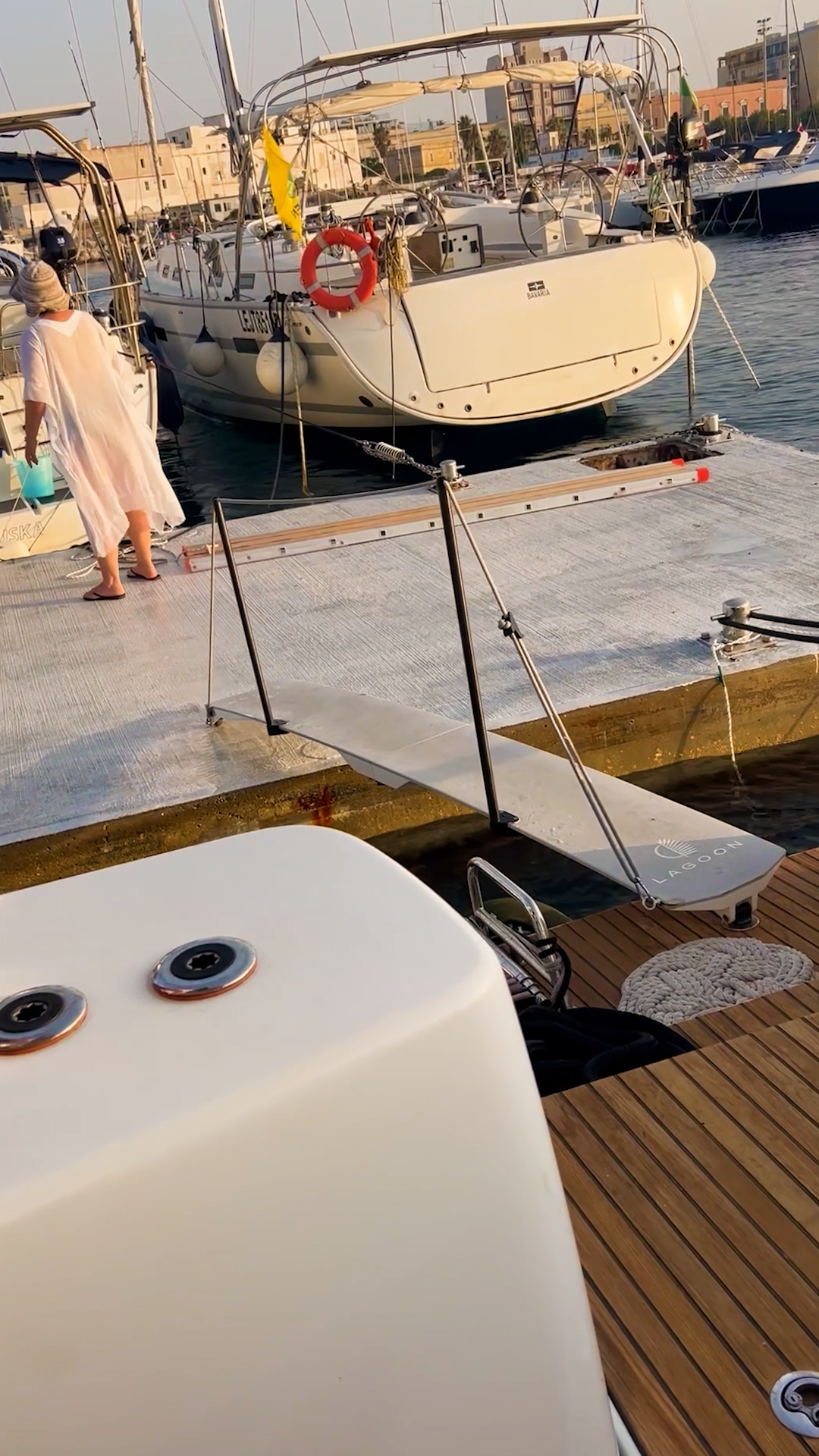
They’re also considering fitting a hydraulic passerelle, not because it’s essential, but because after years of stepping on and off the boat, they recognise how much easier it would make everyday life. For Mike and Linda, each upgrade has been about improving comfort, convenience and spending more time enjoying the experience rather than managing the boat.
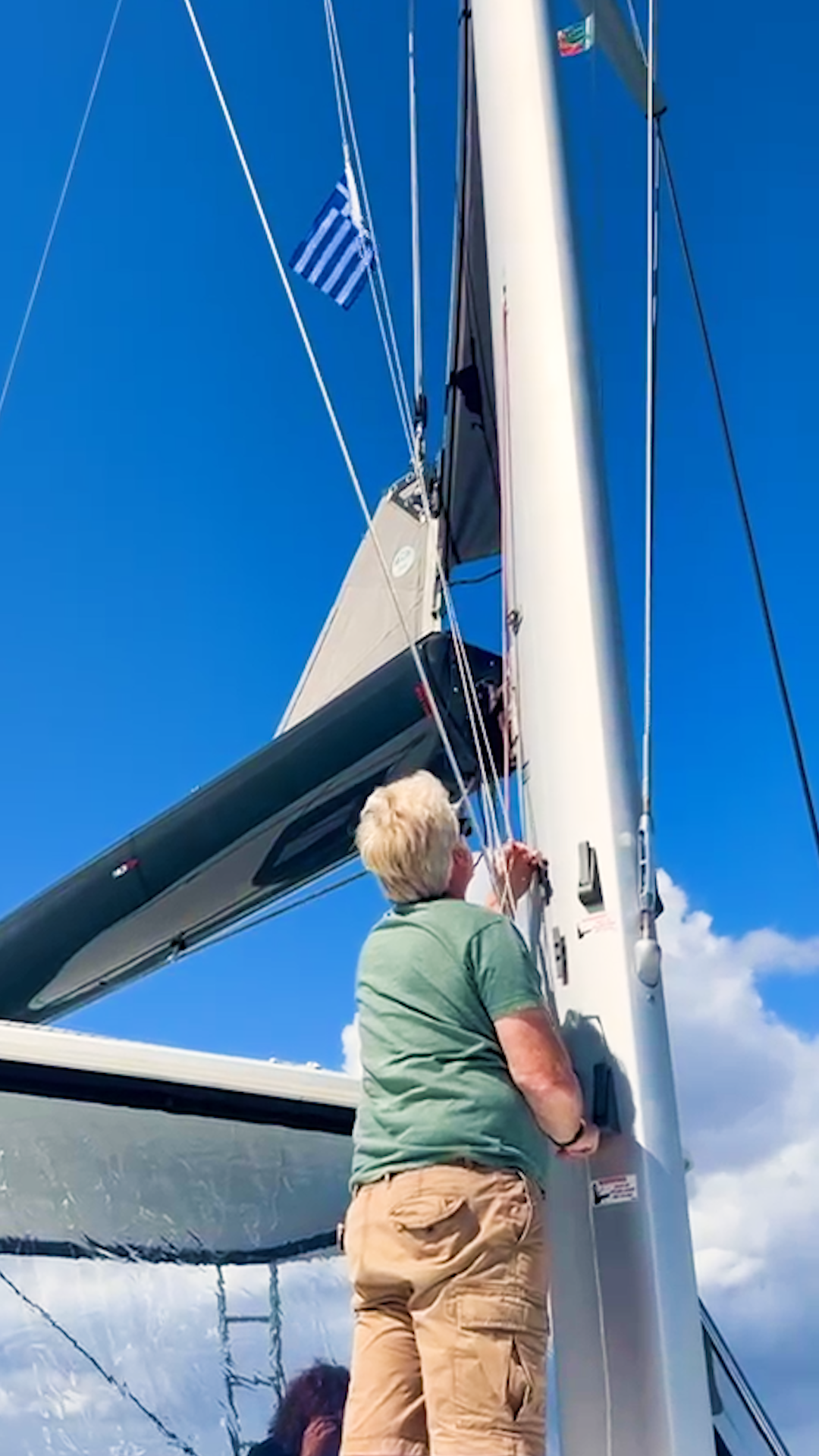
The Joy of Mediterranean Cruising
The biggest lesson Mike and Linda share isn’t about provisioning, equipment or entertaining guests. It’s that cruising the Mediterranean becomes easier with every season.
Before taking delivery, it’s easy to believe you need to prepare for every possible situation. In reality, the Mediterranean is one of the most accessible cruising grounds in the world. Fresh food is readily available, charming markets are around almost every corner, and each destination offers an opportunity to experience new cultures and cuisines.
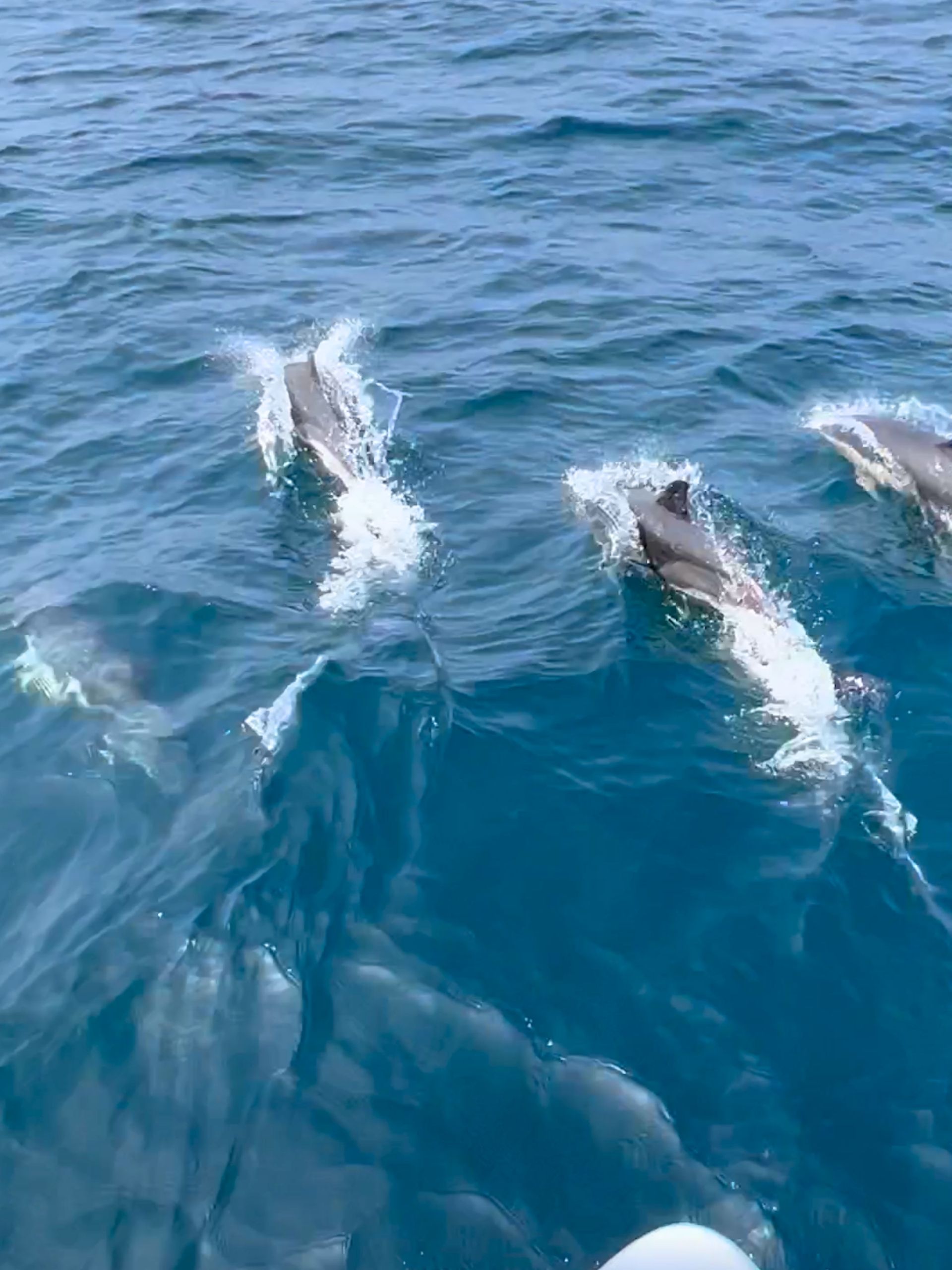
Hosting guests also becomes less about logistics and more about creating memorable experiences. Whether it’s collecting friends by dinghy from a quiet anchorage, sharing local produce around the cockpit, or spotting dolphins during an afternoon passage, these are the moments that define life aboard.
After four seasons, Jabulani’s Journey still discovers new places, new flavours and new ways to make life onboard even more enjoyable. Their advice is simple: don’t try to perfect everything before you leave the dock. Allow yourself to learn as you cruise, because some of the best lessons only come from living the Mediterranean lifestyle.
Frequently Asked Questions About Cruising the Mediterranean
How long should I allow to provision my yacht after European Delivery?
Mike and Linda recommend allowing a few weeks to fully stock your yacht. You’re effectively setting up an entire home in a foreign country, and while everything you need is available in Les Sables d’Olonne, shopping and organising takes longer than most first-time owners expect.
Where should I provision my yacht before cruising the Mediterranean?
Les Sables d’Olonne is an excellent place to prepare your yacht before departure. It offers supermarkets, marine suppliers and homeware stores, allowing new owners to purchase everything from bedding and crockery to pantry essentials.
Do I need to fully stock my yacht before cruising the Mediterranean?
No. One of the biggest lessons from four seasons aboard is that you don’t need to provision as though you’re crossing an ocean. Supermarkets, local markets and speciality food stores are readily available throughout the Mediterranean, making it easy to replenish supplies regularly.
What food should I always keep onboard?
Keep simple pantry staples such as pasta, rice, canned goods and long-life ingredients that can be turned into an easy meal if you’re anchored somewhere with limited shopping options.
Is it easy to buy groceries while sailing the Mediterranean?
Yes. One of the joys of Mediterranean cruising is discovering local produce. Whether it’s an artisan butcher in Greece, fresh bread in France or markets in Italy and Spain, fresh food is available almost everywhere.
Can guests bring hard suitcases onto a yacht?
No. Soft bags are much easier to store onboard and make moving luggage between the dinghy and the yacht significantly easier than hard-shell suitcases.
Do you need to stay in a marina when guests arrive?
Not necessarily. Jabulani’s Journey discovered that collecting guests by dinghy from a nearby town often became one of the highlights of their trip and allowed everyone to enjoy beautiful anchorages rather than spending unnecessary time in marinas.
What’s the biggest mistake first-time Mediterranean cruisers make?
Trying to overprepare. Most new owners carry too much food, too much equipment and try to plan every detail. The Mediterranean offers excellent infrastructure, making it easy to adapt as you travel.
What upgrades make life easier after taking delivery?
After several seasons, Jabulani’s Journey found that upgrades such as an electric Code Zero furler and in-boom furling transformed their sailing experience by making sail handling faster, easier and more enjoyable.
LATEST LAGOON CATAMARAN REVIEWS
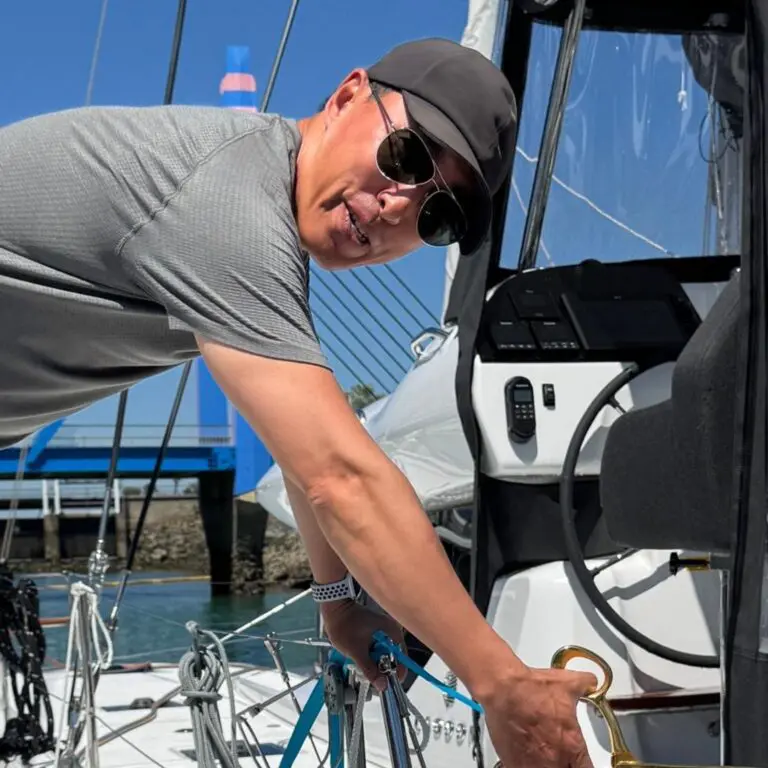
Why The Lagoon 43 is the Best Catamaran for Liveaboard Cruising – Long
Long, a first-time catamaran owner, spent years researching before choosing the Lagoon 43 for his global sailing adventure starting in France.
“It has fully met my expectations. The size is just right for me, spacious but manageable, and very livable. After two months and over 2,000 nautical miles of sailing, I’ve been very happy with its performance. The interior layout, saloon design, semi flybridge, and included configurations perfectly suit my family’s lifestyle and the way we entertain friends on board.
If what you really want is a valuable, challenging, and rewarding life experience, then absolutely go for it. This kind of journey is absolutely worth it.”
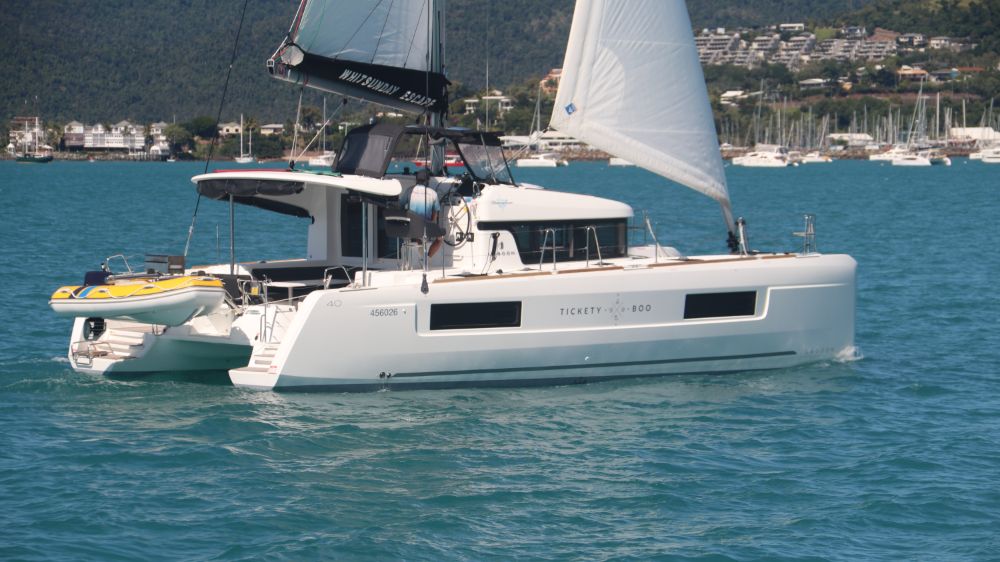
Lagoon Catamaran Charter Boat Investment Journey – Mike
Six years after purchasing a Lagoon 40 for charter in the Whitsundays, Mike reflects on the decision that exceeded expectations.
“We approached the charter boat investment with a business mindset. We modelled everything conservatively, and honestly, it’s performed better than expected. Even through COVID, we averaged around 165 charter nights a year, and the boat held its value far better than we’d anticipated.
The Lagoon 40 hit the sweet spot, it’s the perfect size for the Whitsundays market. Less intimidating for first-timers, and a strong performer in bookings.
The boat was delivered basically ready to charter.
After six years, I’d absolutely do it all again. It’s been a positive experience from start to finish, and if we go again I’d be looking at the Lagoon 43.”
⋆⋆⋆⋆⋆
Lagoon 46 Favourite Features Real Owner Testimonial – Mike and Linda
After 2 seasons of sailing the Med on their Lagoon 46 Mike and Linda shared what they love most, “The Lagoon 46 has given us a whole new level of freedom and comfort. I love the Code Zero sail for light wind performance, and Linda’s favourite spot is the flybridge, it’s where everyone gathers when we’re sailing. With a watermaker and generator on board, we’ve been able to explore more remote places and stay cool during the heatwaves in Greece. It’s made the whole experience effortless and enjoyable.”
⋆⋆⋆⋆⋆