
Catamaran Sailing Tips: Lessons Learned After Four Seasons Cruising the Mediterranean
Jabulani’s Journey Part 5 with Lagoon 46 Owners, Mike and Linda
There are some things about sailing you can learn from a course, a manual or another sailor. Then there are the lessons that only come from getting out there and doing it yourself.
After four seasons of Mediterranean cruising aboard their Lagoon 46, Mike and Linda have become considerably more confident sailors than when they first set off. From mastering Mediterranean mooring and tackling overnight passages to reading changing weather conditions and learning to maintain more of the yacht themselves, each season has pushed them a little further outside their comfort zone.
Their biggest lesson? Don’t be afraid to give things a go.
Many of the situations that once felt intimidating have now become a normal part of life onboard. In this guide, Mike and Linda share their most valuable catamaran sailing tips, the lessons they’ve learned along the way, and why continually challenging yourself can help you get so much more from your yacht and your travels.
Choosing the Right Catamaran for the Way You Want to Cruise
Before there were lessons about mooring, weather and overnight passages, Mike and Linda had to make one very important decision: choosing the right yacht.
They weren’t new to Lagoon. Their previous catamaran was a Lagoon 380, and when it came time to upgrade, they naturally returned to the brand while also considering other options.
Initially, the Lagoon 42 was a serious contender. Ultimately, however, they decided the Lagoon 46 offered the additional space they wanted for extended cruising.
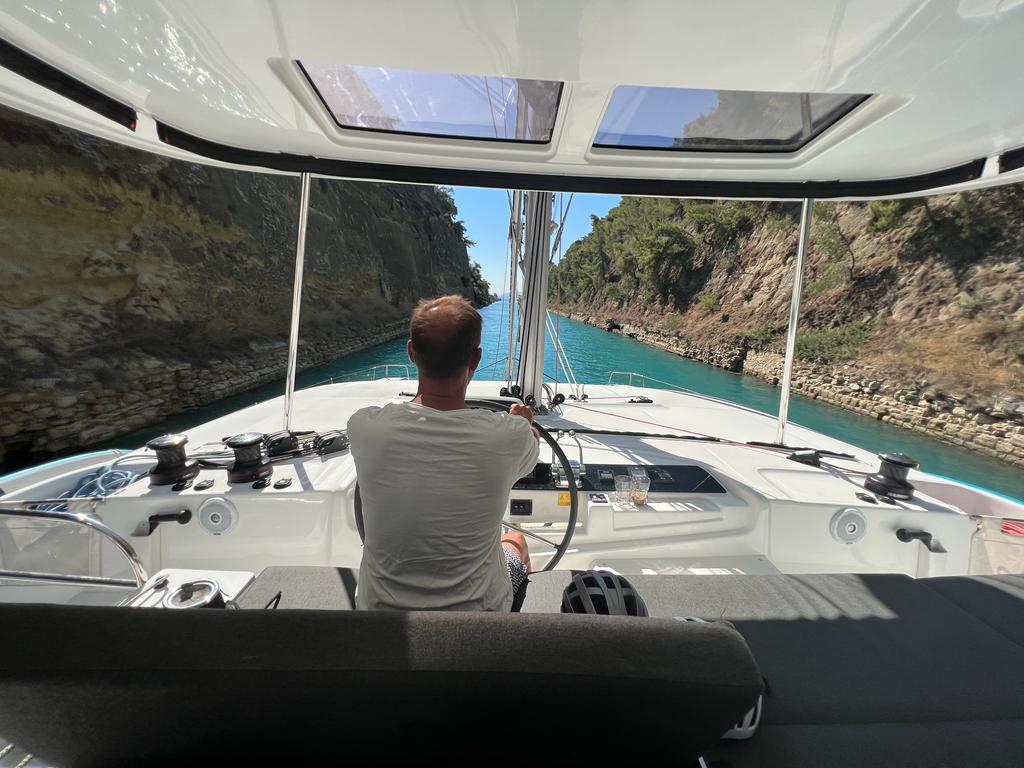
There was one important consideration. They also believed 46 feet was about as large as they wanted to handle as a couple.
With relatively limited sailing experience when they first began their journey, Mike and Linda wanted a yacht they felt comfortable managing themselves. At the same time, with five children and regular visits from family and friends, they needed enough space for everyone to enjoy being onboard without constantly being on top of one another.
Four seasons later, they don’t regret the decision.
Lagoon 46 Review: What Do Owners Think After Four Seasons?
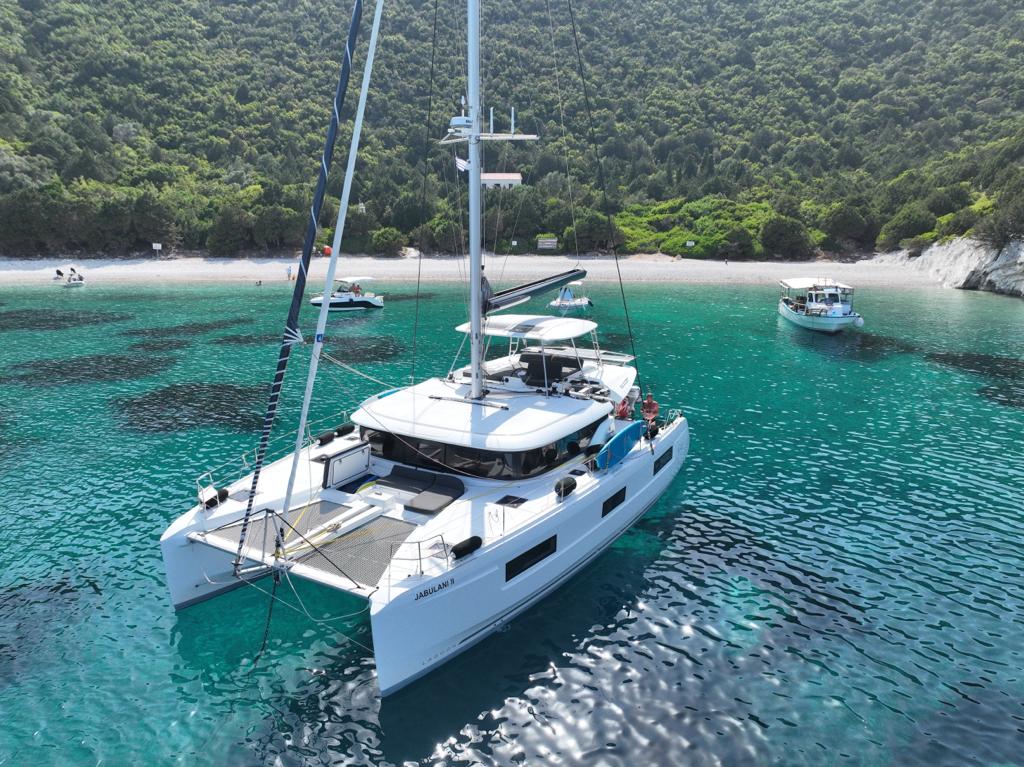
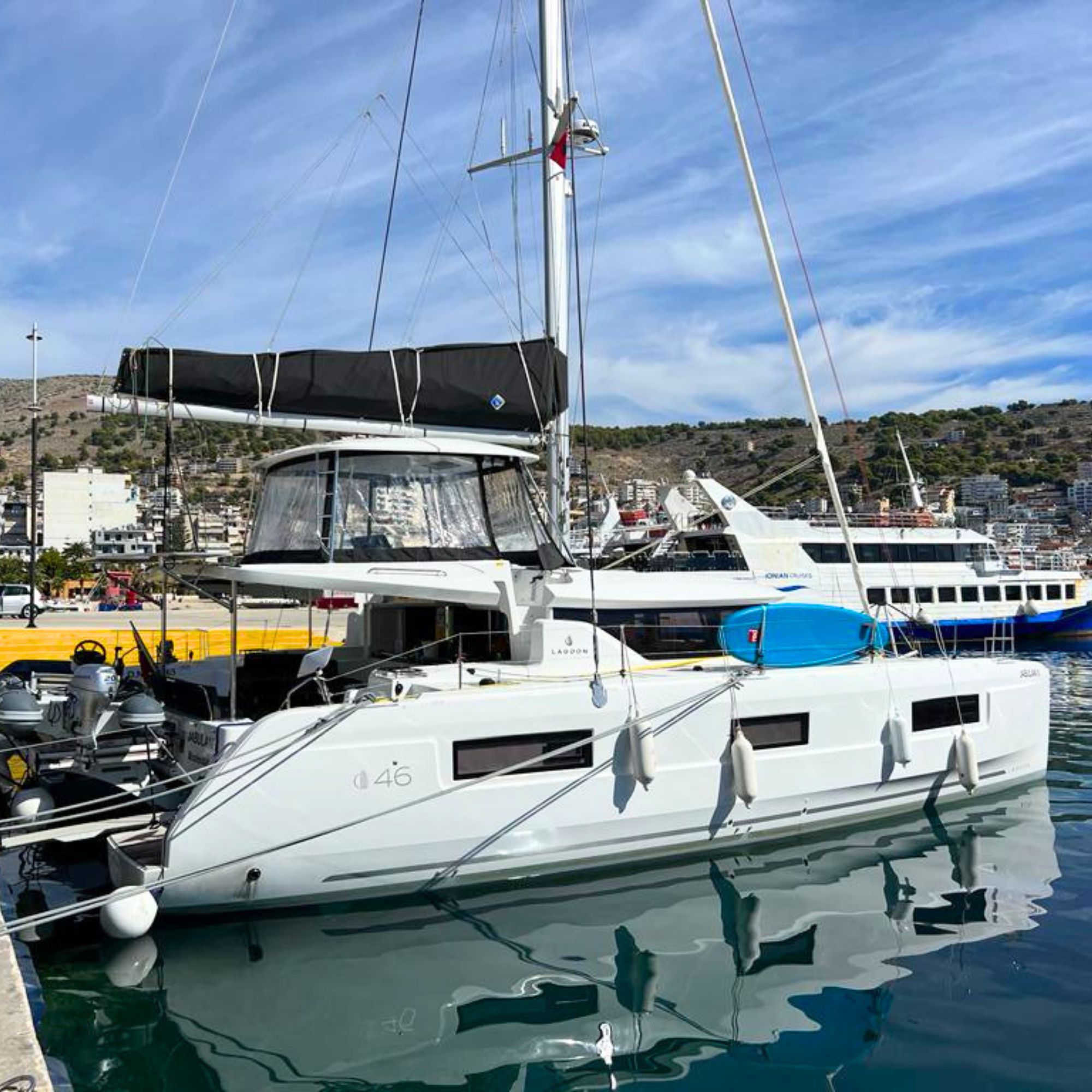
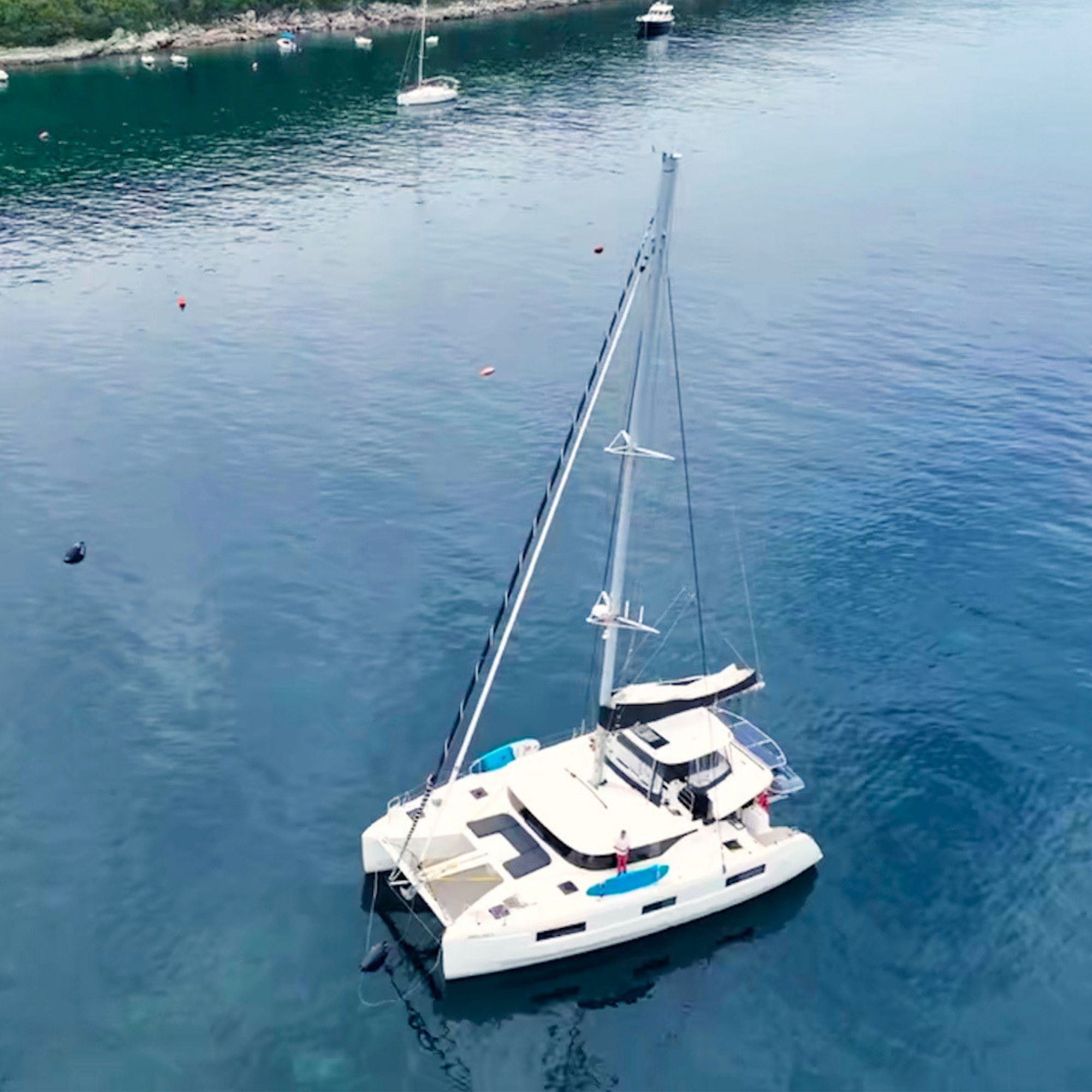
For Mike and Linda, one of the greatest strengths of the Lagoon 46 is its ability to balance space with a sailing experience they can enjoy as a couple.
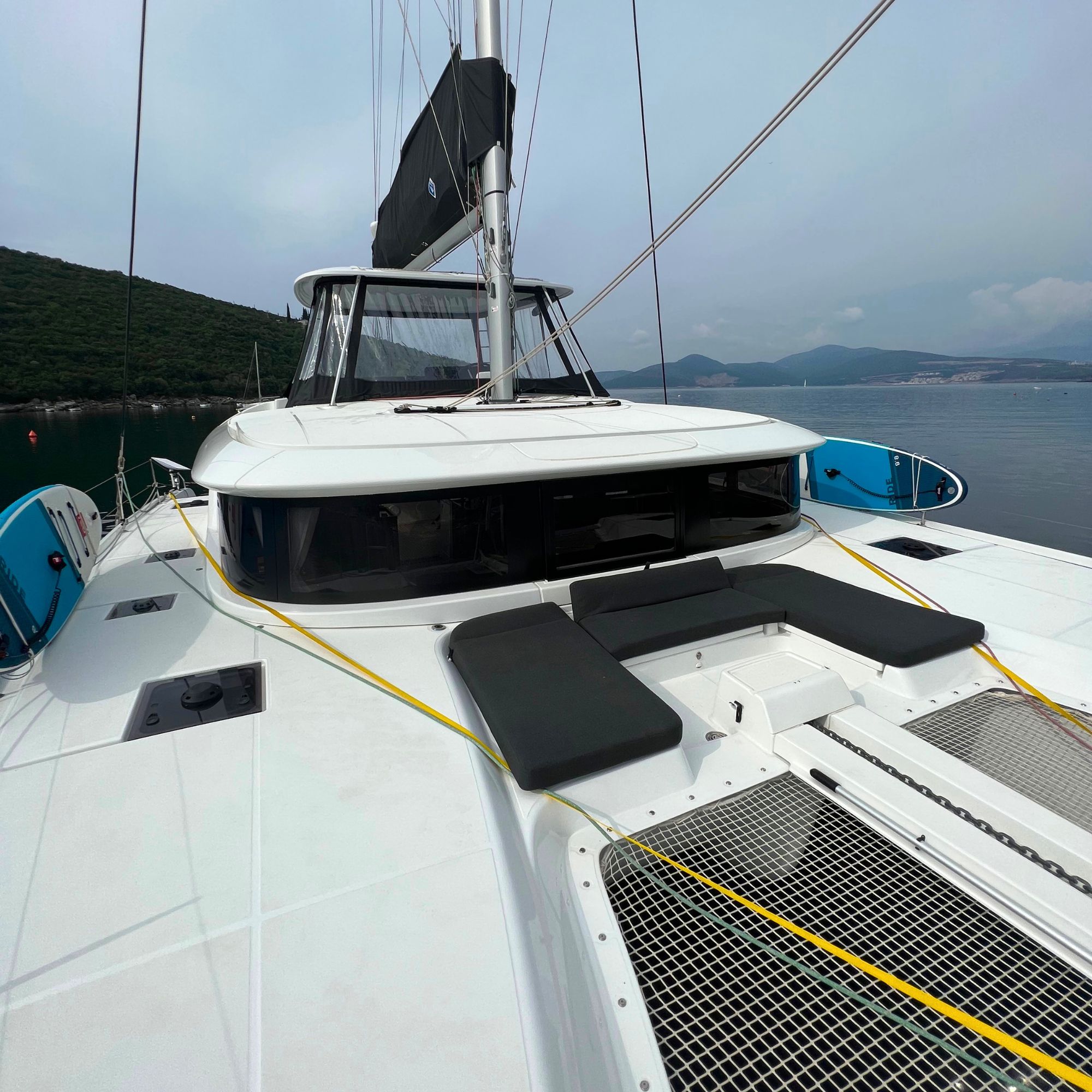
The yacht provides several separate entertaining areas, from the flybridge and saloon to the aft cockpit. When they have eight people onboard, everyone can find their own space without the yacht feeling crowded.
But it’s what happens when the engines are switched off that they particularly love.
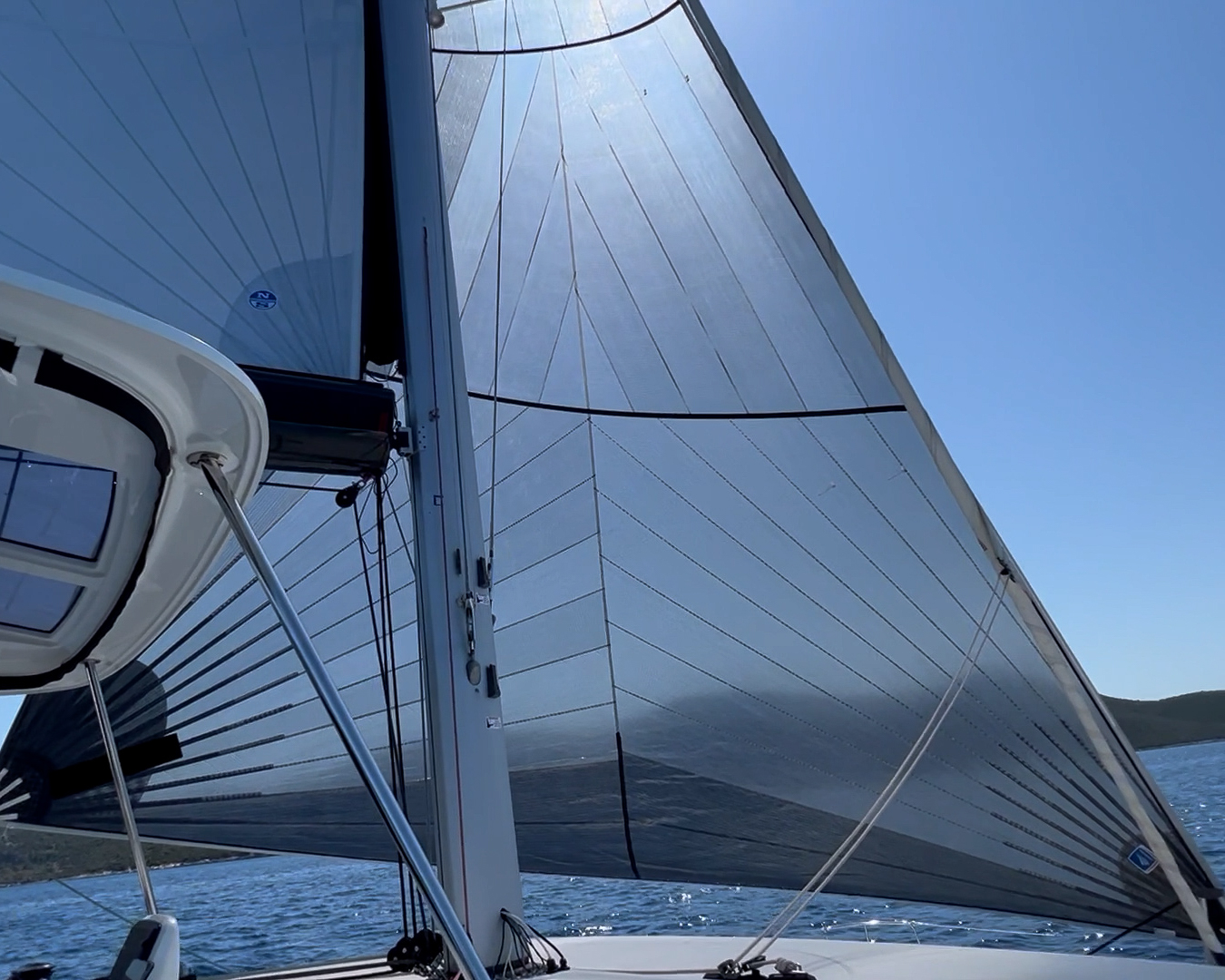
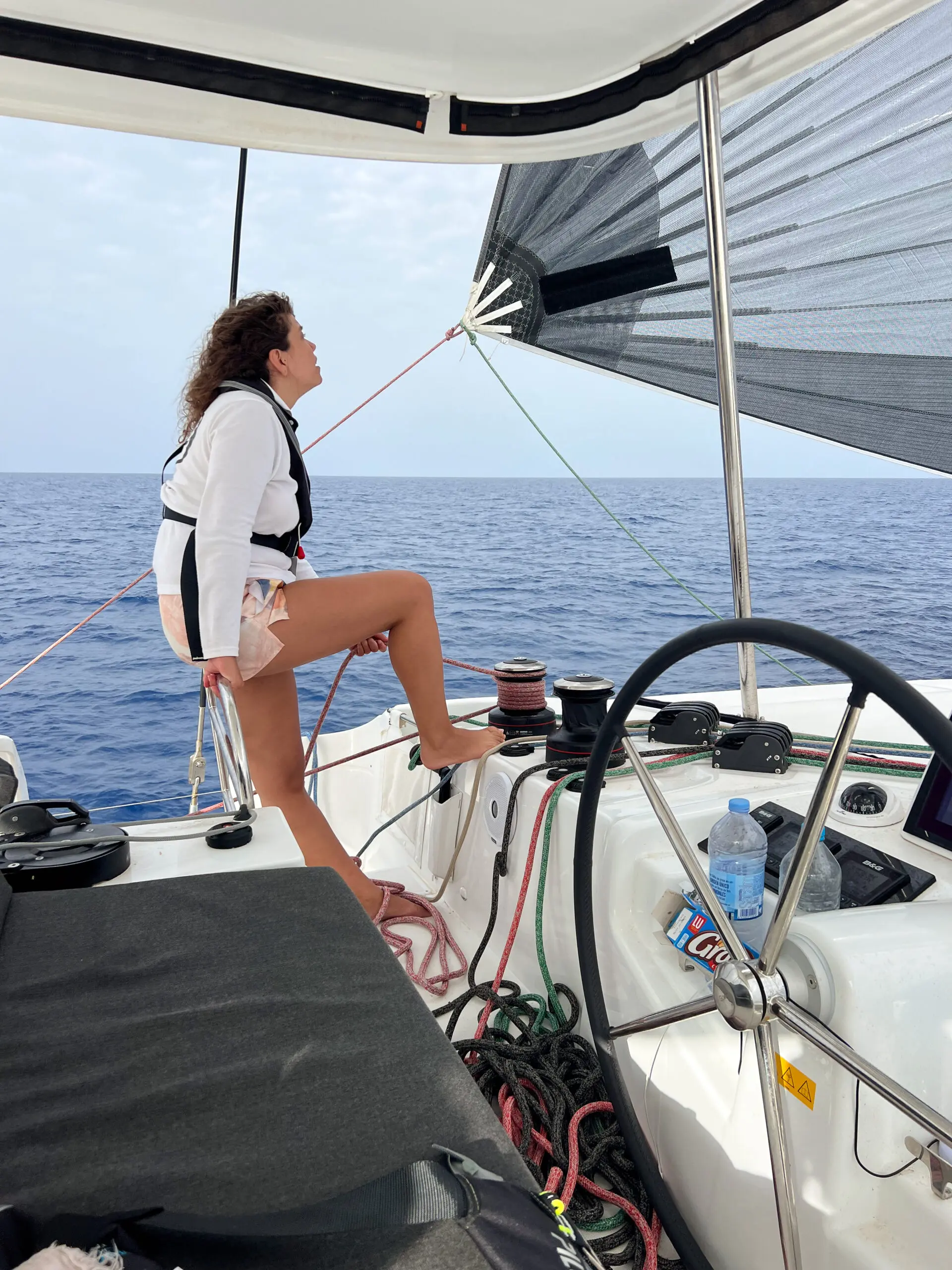
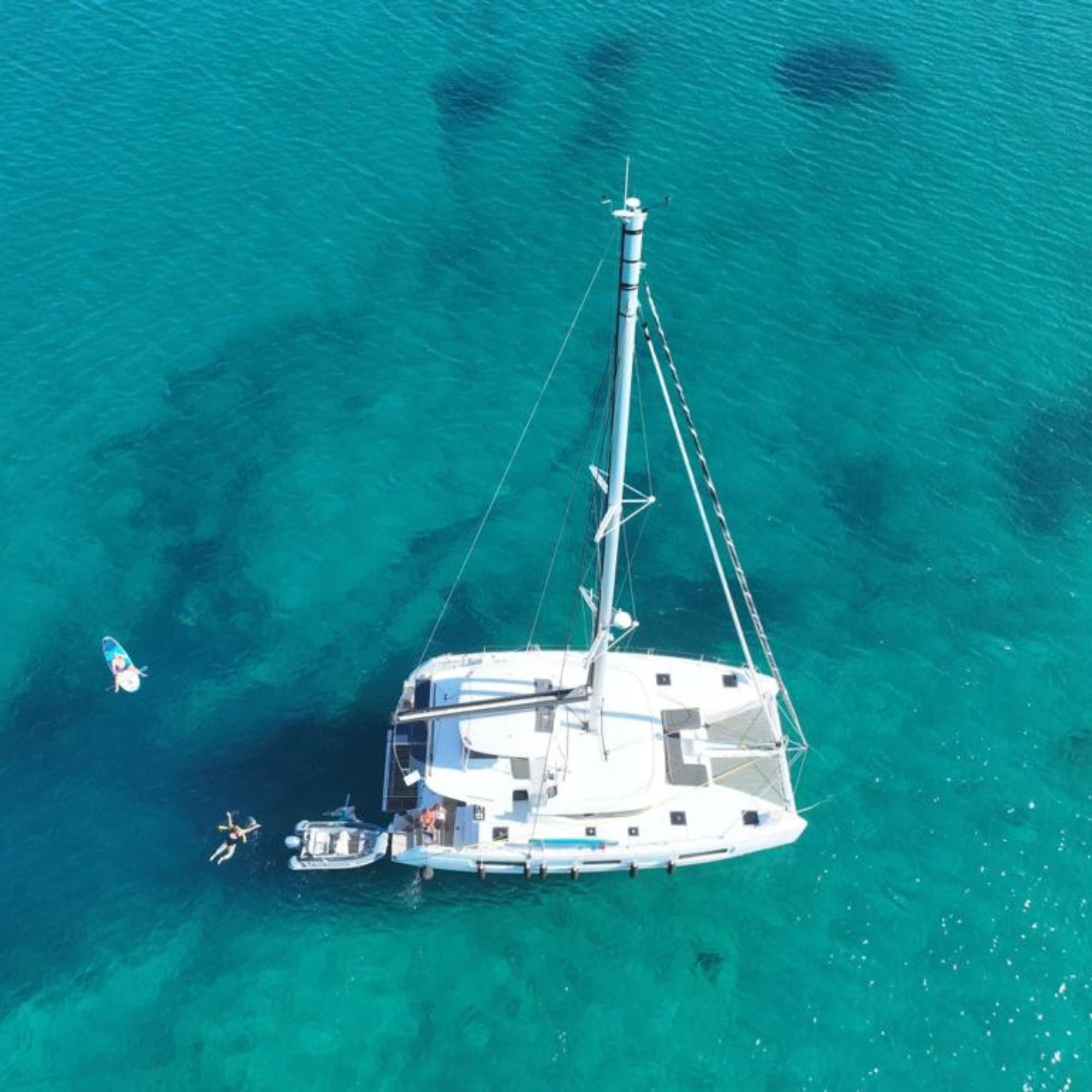
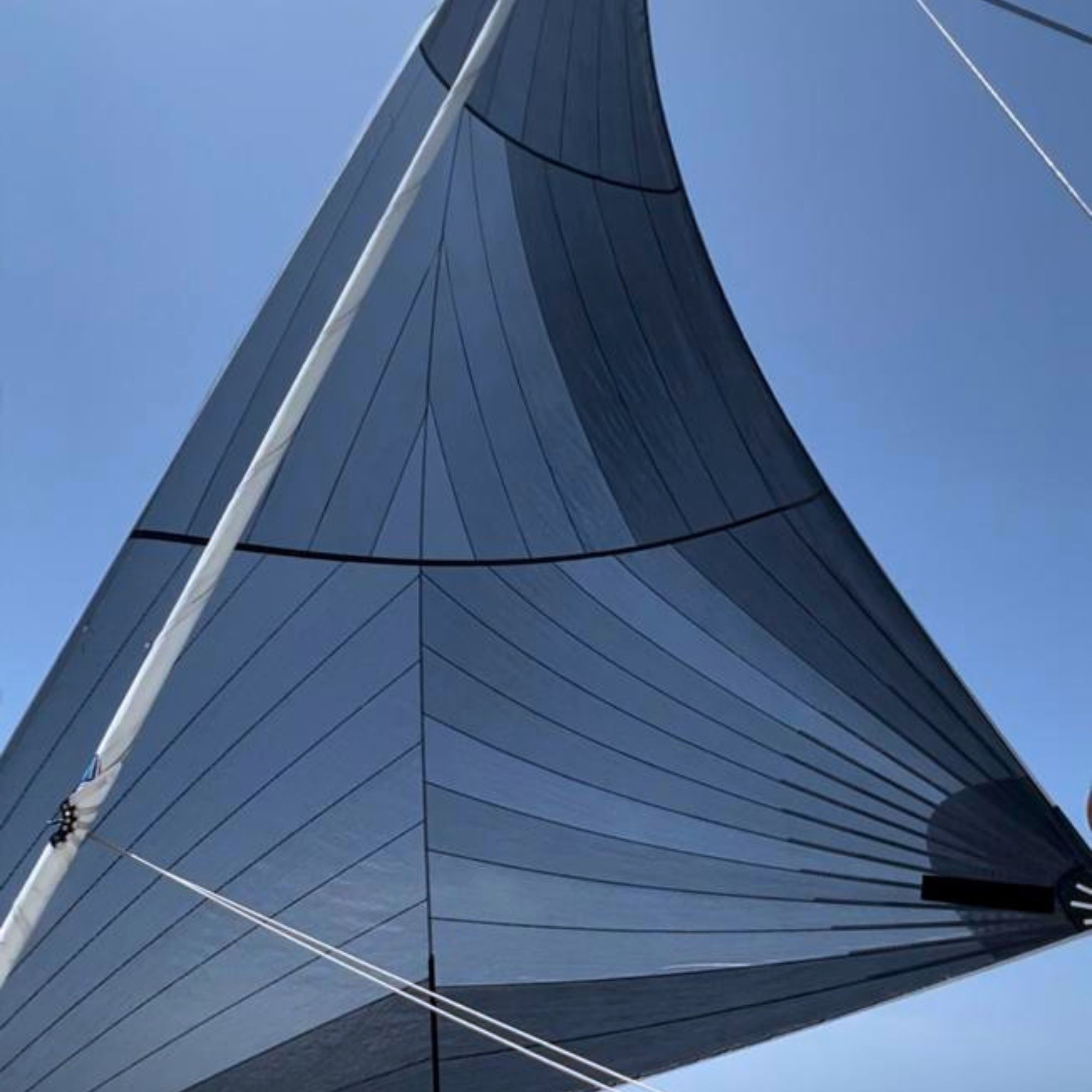
Mike and Linda describe their Lagoon 46 as beautiful to sail, whether she’s moving comfortably at five knots or reaching towards 10 knots in the right conditions. Their Code Zero has become a particular favourite, both for its performance and the experience of watching the yacht glide through the water under sail.
Their experience offers an important lesson for anyone choosing a cruising catamaran. Bigger isn’t automatically better.
Think about how you’ll actually use the yacht. How many people will regularly be onboard? Will you predominantly sail as a couple? How confident are you handling the boat? And how much space do you genuinely need?
The right yacht is ultimately the one that balances your ambitions with your ability to comfortably manage it.
Mediterranean Mooring: One of Their Biggest Learning Curves
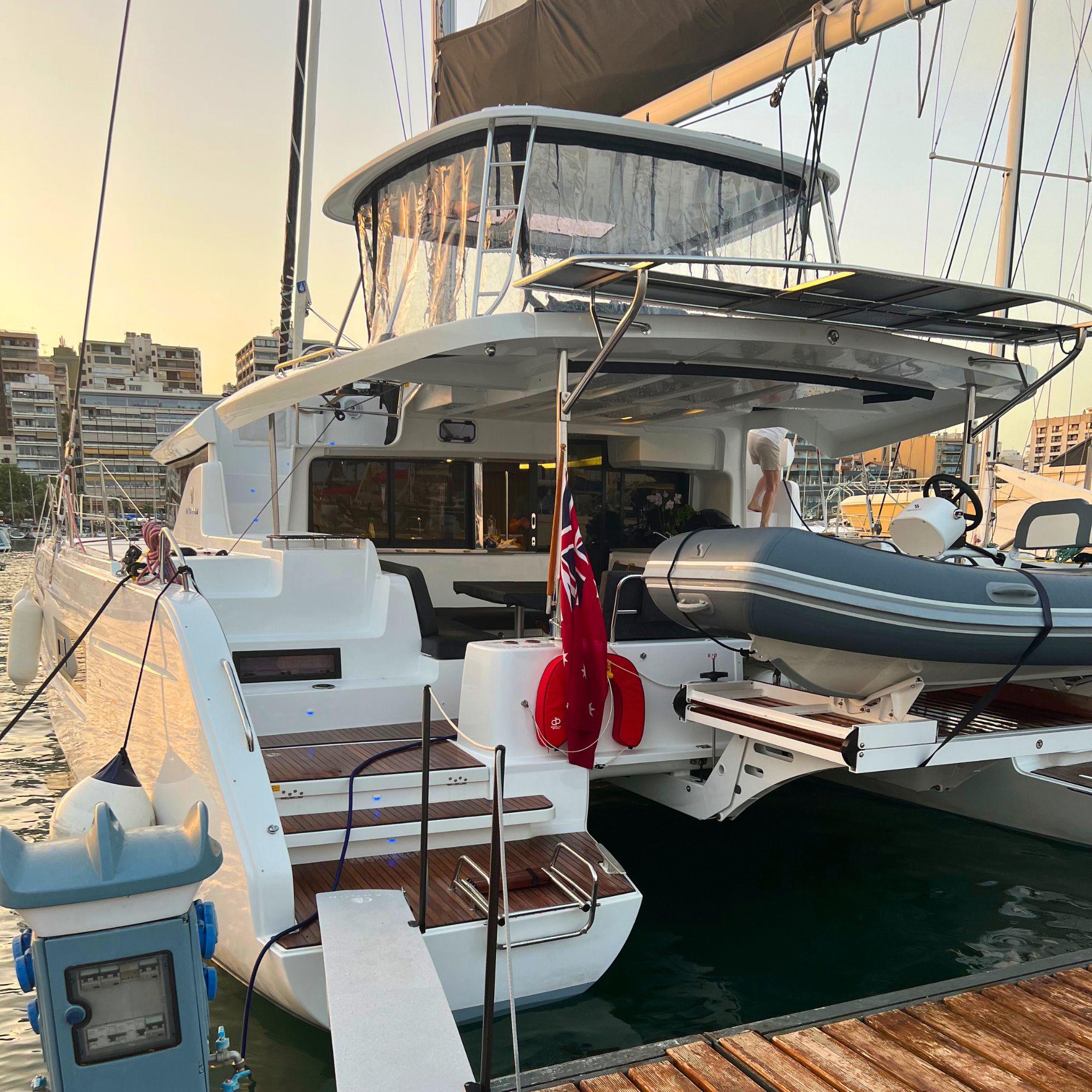
Of all the catamaran sailing tips Mike and Linda have picked up, learning to Med moor has been one of the most valuable.
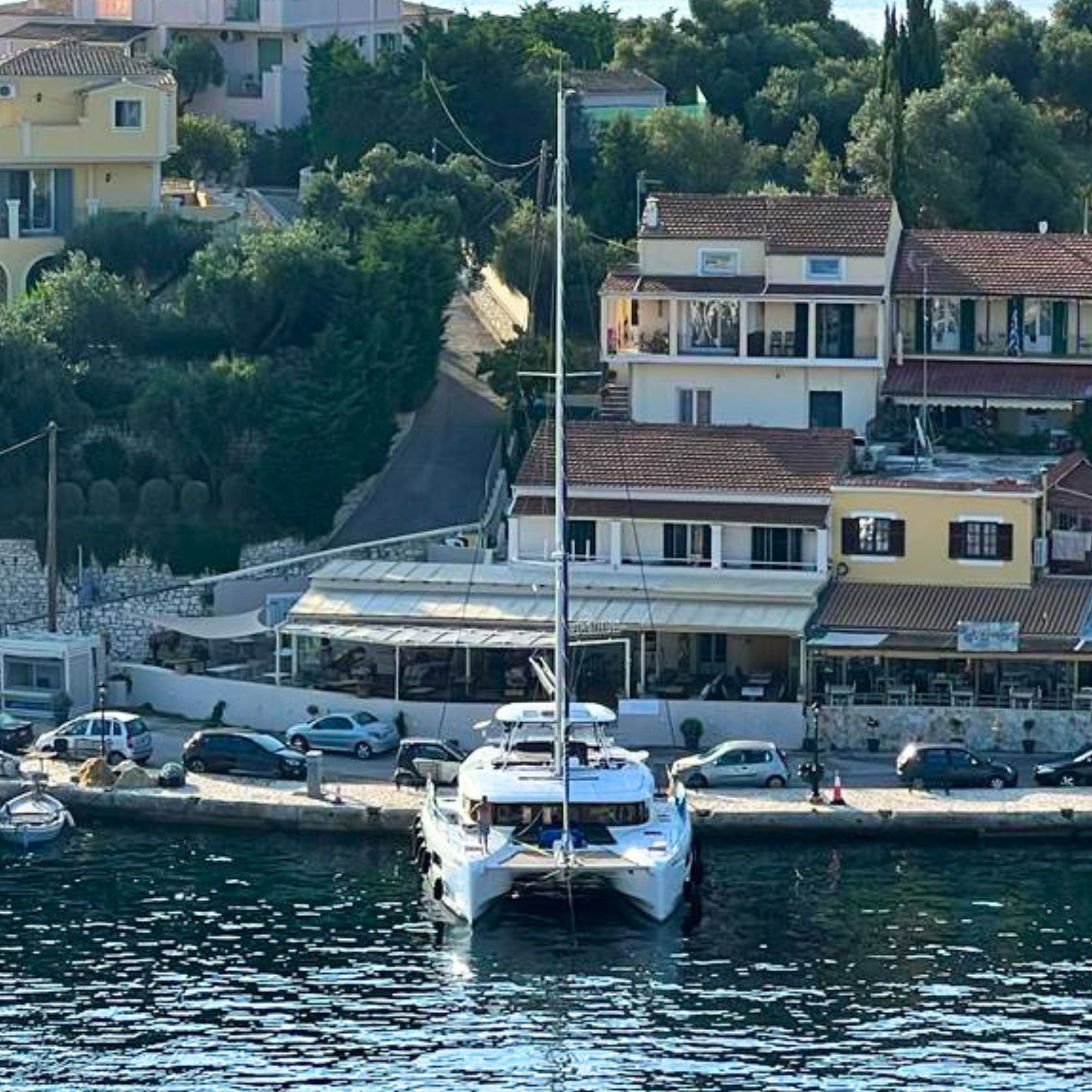
Mediterranean mooring, or Med mooring, is common throughout cruising destinations such as Greece, Croatia and Turkey. Rather than simply pulling alongside a pontoon, the yacht is typically secured stern-to, with the bow held away from shore by an anchor or mooring arrangement.
It was something Mike and Linda initially found confronting.
Today, after years of practice, it’s something they approach with far more confidence.
Get the Right Floating Lines
Their first lesson came from making a mistake.
They purchased what they thought was a floating line, only to discover that it sank. That’s particularly inconvenient when someone needs to swim the line ashore.
Length matters too.
Initially, Mike and Linda purchased around 50 metres of line. From their experience, they now prefer approximately 70 to 100 metres, giving them considerably more flexibility when securing the yacht.
For anyone preparing for Mediterranean cruising, their advice is to make sure you’re carrying genuinely floating lines and give yourself more length than you think you’ll need.
Setting the Anchor Is Critical
Equipment is only one part of the process.
Mike and Linda found that much of their confidence came from developing a consistent procedure, particularly when setting the anchor.
When backing towards shore, they make sure the anchor is properly set and holding before swimming their lines ashore. Getting tension through the anchor and confirming that it has set gives them confidence that the yacht will remain securely positioned.
They also picked up a valuable Mediterranean mooring tip from a harbour master in Greece.
After the boat has been settled for approximately an hour, they return to the anchor and tighten it again. A few additional presses on the windlass can help restore tension after the yacht and lines have settled into position.
It’s a small step, but one they’ve incorporated into their regular routine.
Don’t Let Other Boats Rush You
Perhaps their most important Mediterranean mooring lesson has nothing to do with equipment.
Take your time.
Mike and Linda remember one of their early attempts involving strong winds, current and another boat putting pressure on them to get into position quickly. Add an audience of other yacht owners watching from nearby boats, and the pressure can quickly build.
Their experience taught them to block that out.
As they heard regularly while cruising Greece, “slowly, slowly.”
Focus on your own yacht, your own process and what you need to do safely. Don’t allow someone else’s impatience to rush you through a manoeuvre you’re not comfortable with.
The more they practised, the less intimidating it became. By their fourth season, Mike and Linda felt they’d reached the point where they genuinely understood their Mediterranean mooring process.
That’s an important theme throughout all their cruising tips. Confidence didn’t arrive before they attempted something difficult. It developed because they kept doing it.
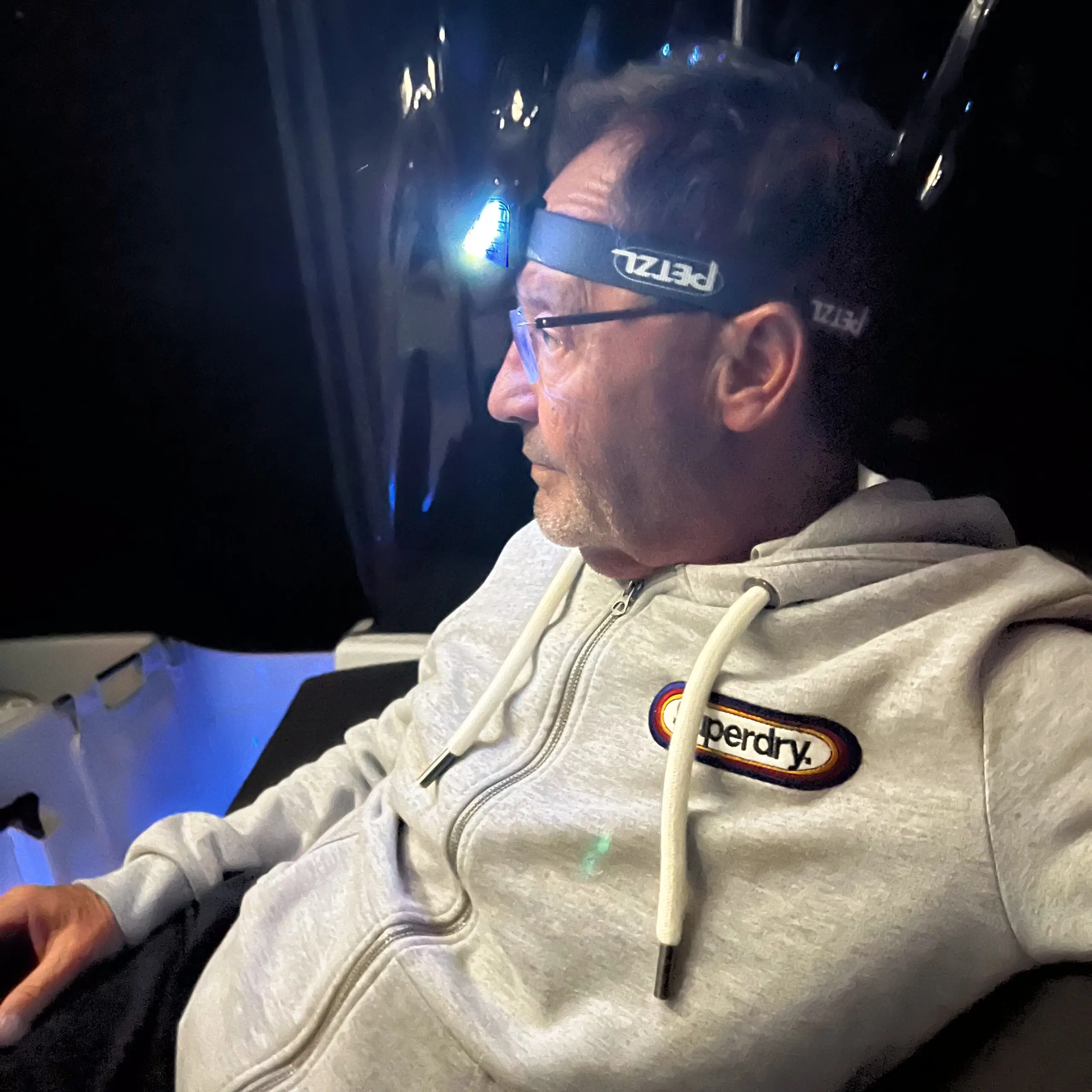
Overnight Sailing: What They’ve Learned
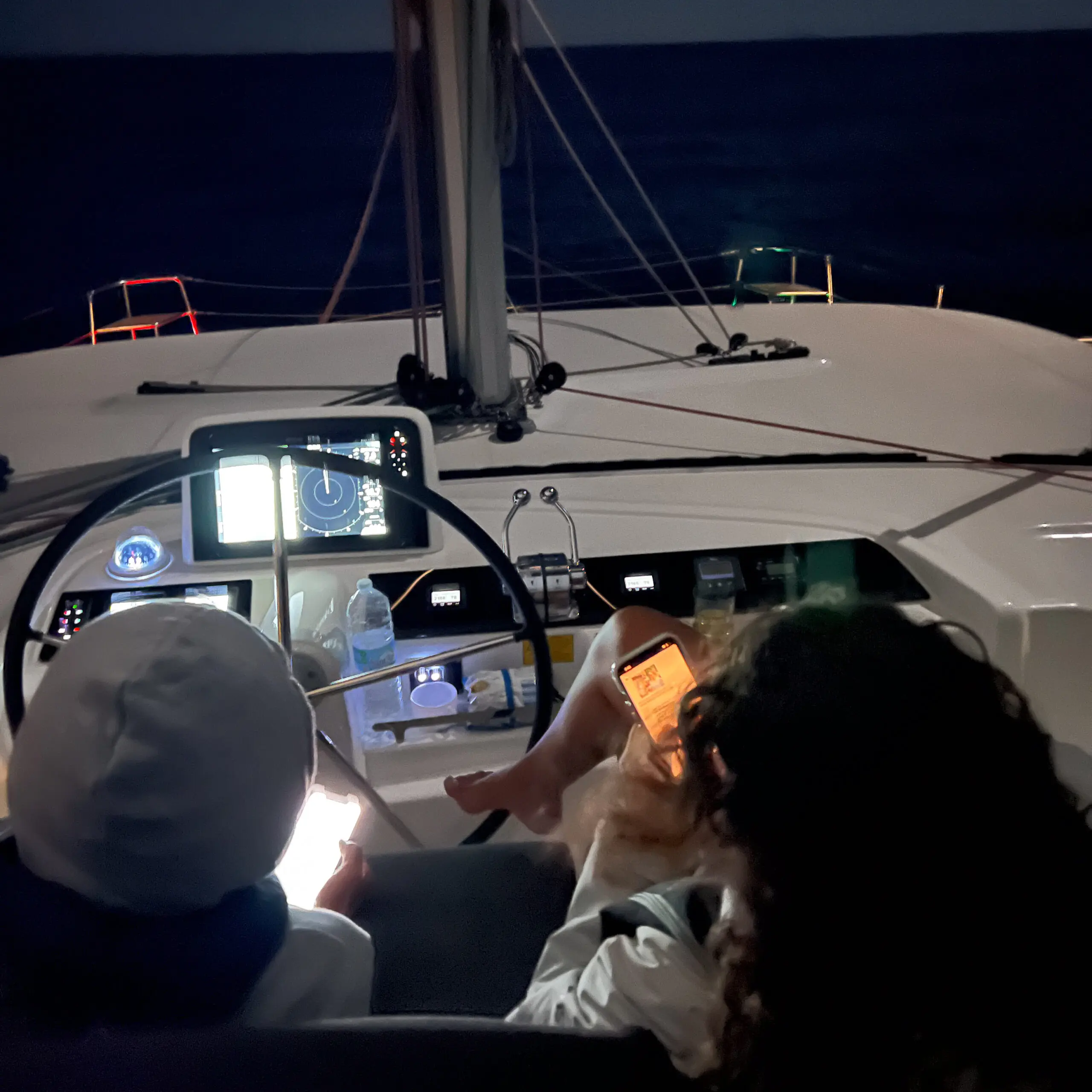
An overnight passage can be one of the more intimidating milestones for newer cruising sailors.
Limited visibility changes your perception of the conditions around you, while changing weather can feel very different after sunset.
After completing their own overnight passages, Mike and Linda have developed a few simple habits that make the experience more comfortable.
Plan Overnight Passages Around the Moon
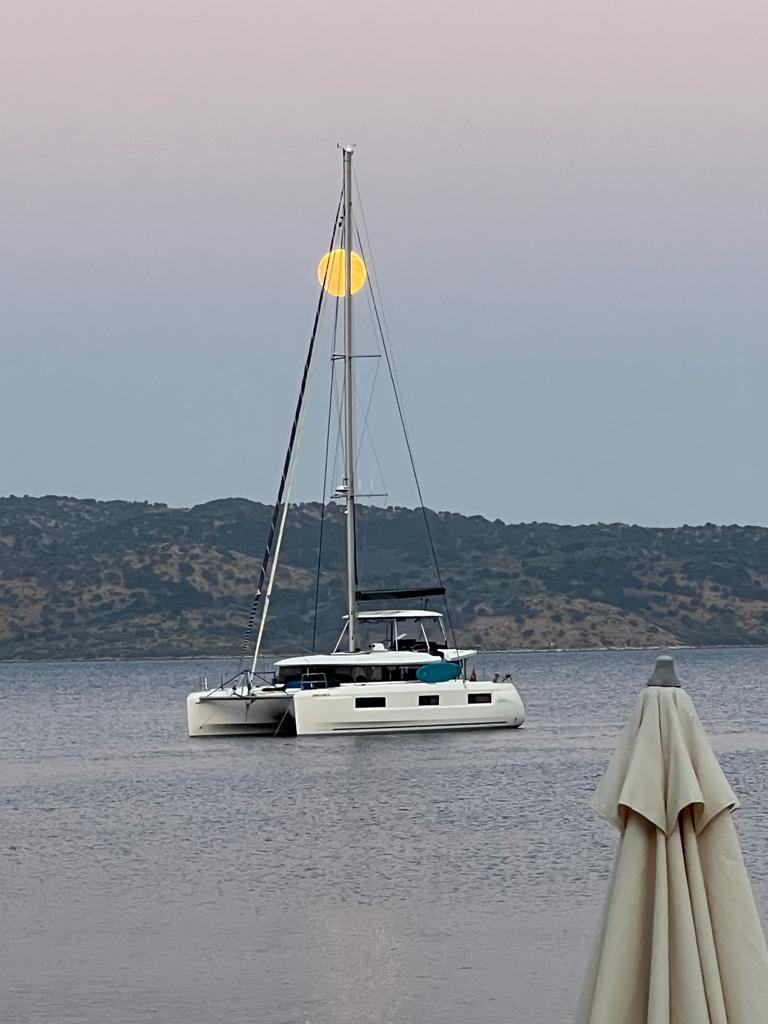
Where possible, they like to plan overnight sailing when there will be some moonlight.
Even a half moon can provide a surprising amount of illumination on the water. For Mike and Linda, that additional visibility makes an overnight passage feel significantly more comfortable.
It’s not always possible to organise a passage around a full moon, of course, but when their itinerary and weather allow it, it’s something they consider.
Reef Before Sunset
Their second rule is even simpler.
Before sundown on an overnight passage, they put a reef in the mainsail.
They do this regardless of whether it costs them a little speed.
Conditions can change throughout the night, and reefing earlier means they begin the hours of darkness with a more conservative sail plan already in place.
For Mike and Linda, the small sacrifice in performance is worth the added peace of mind.
It’s a useful reminder that good catamaran sailing tips aren’t always about going faster or extracting maximum performance from the yacht. Sometimes they’re about making decisions that keep the crew comfortable and confident.
Mediterranean Weather: Never Rely on Just One Forecast
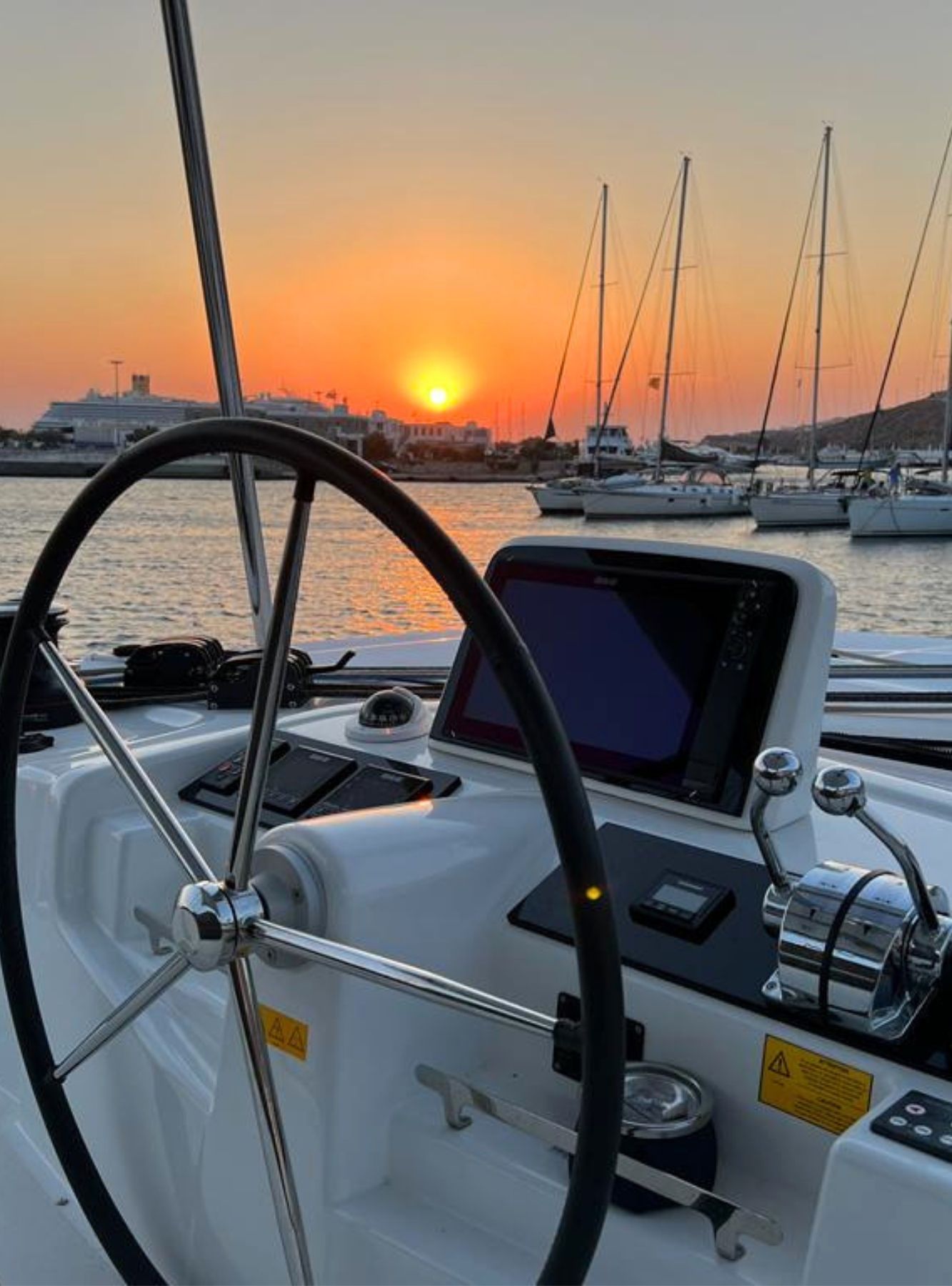
Understanding Mediterranean weather has also become an important part of Mike and Linda’s cruising routine.
The weather is constantly changing, particularly in areas such as Greece, and conditions can have a significant impact on where and when you choose to sail.
Their solution is simple. They don’t rely on a single forecast.
Instead, Mike and Linda compare information across several weather sources before making decisions, including PredictWind and Windy, as well as an additional weather service they use while cruising Greece.
Looking at multiple forecasts allows them to compare the models and get a broader picture of what conditions might be developing rather than placing all their confidence in a single prediction.
For anyone planning extended Mediterranean cruising, checking the forecast shouldn’t simply be something you do before departing. Weather monitoring becomes an ongoing part of everyday cruising and passage planning.
Combined with experience, it helps you recognise when it’s a great day to move and when staying in a beautiful anchorage for another night might be the better decision.
Yacht Maintenance: Learning to Fix Things Yourself
The sailing isn’t the only thing that has changed over four seasons. Mike and Linda’s understanding of their yacht has evolved enormously too.
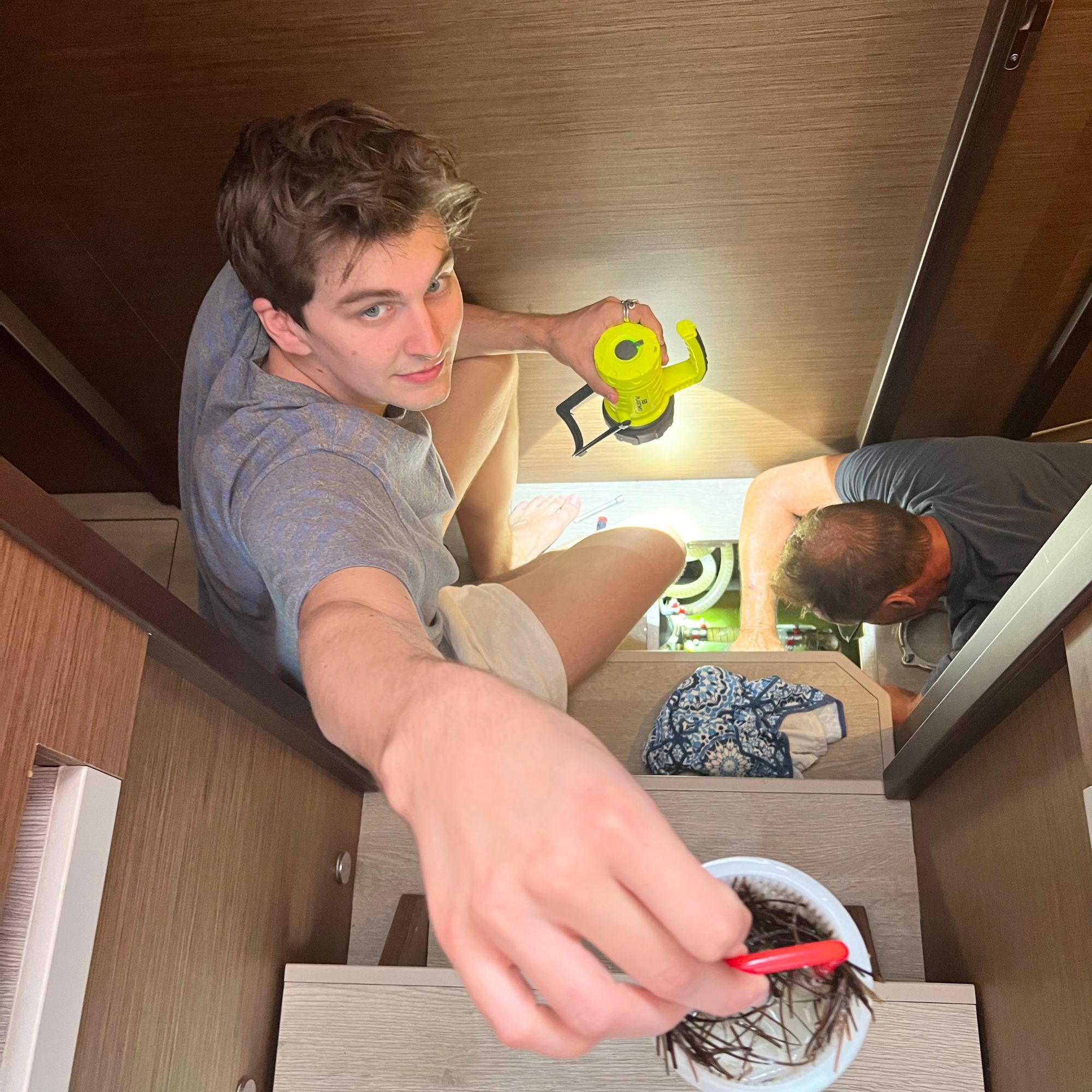
When they began, Mike says he never imagined he’d be servicing the generator himself.
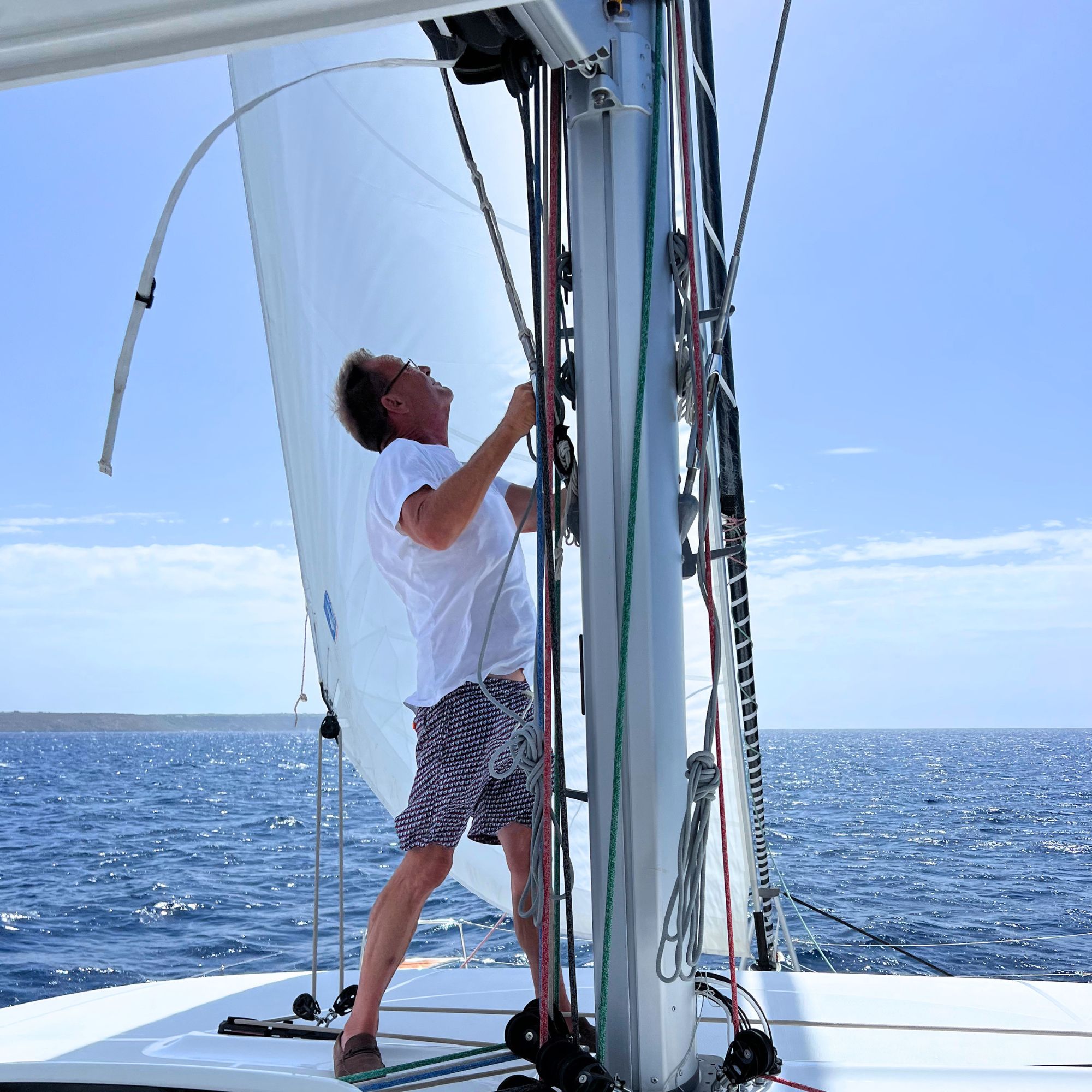
Today, he’s not only servicing it, he’s replaced components such as its water pump.
It’s a natural progression that happens when you spend extended periods living aboard. You begin to understand how the yacht’s systems work, recognise when something doesn’t sound or behave quite right, and develop the confidence to investigate smaller problems yourself.
Things Will Break, and That Doesn’t Always Mean Something Is Wrong
One of Mike and Linda’s most practical yacht maintenance lessons is accepting that a cruising yacht is constantly working.
Equipment gets used. Parts wear. Things occasionally break.
That doesn’t necessarily mean something has been poorly manufactured or that somebody has done something wrong.
During one particularly hot Mediterranean season, for example, Mike and Linda were running their generator frequently to power the air conditioning, including throughout hot nights when temperatures remained high.
That additional use inevitably meant greater wear and eventually resulted in components needing replacement.
Instead of seeing every maintenance issue as a major problem, they’ve learned to see many of them as a normal part of owning and regularly using a yacht.
Build Your Skills as You Cruise
You don’t need to become a marine mechanic before setting off.
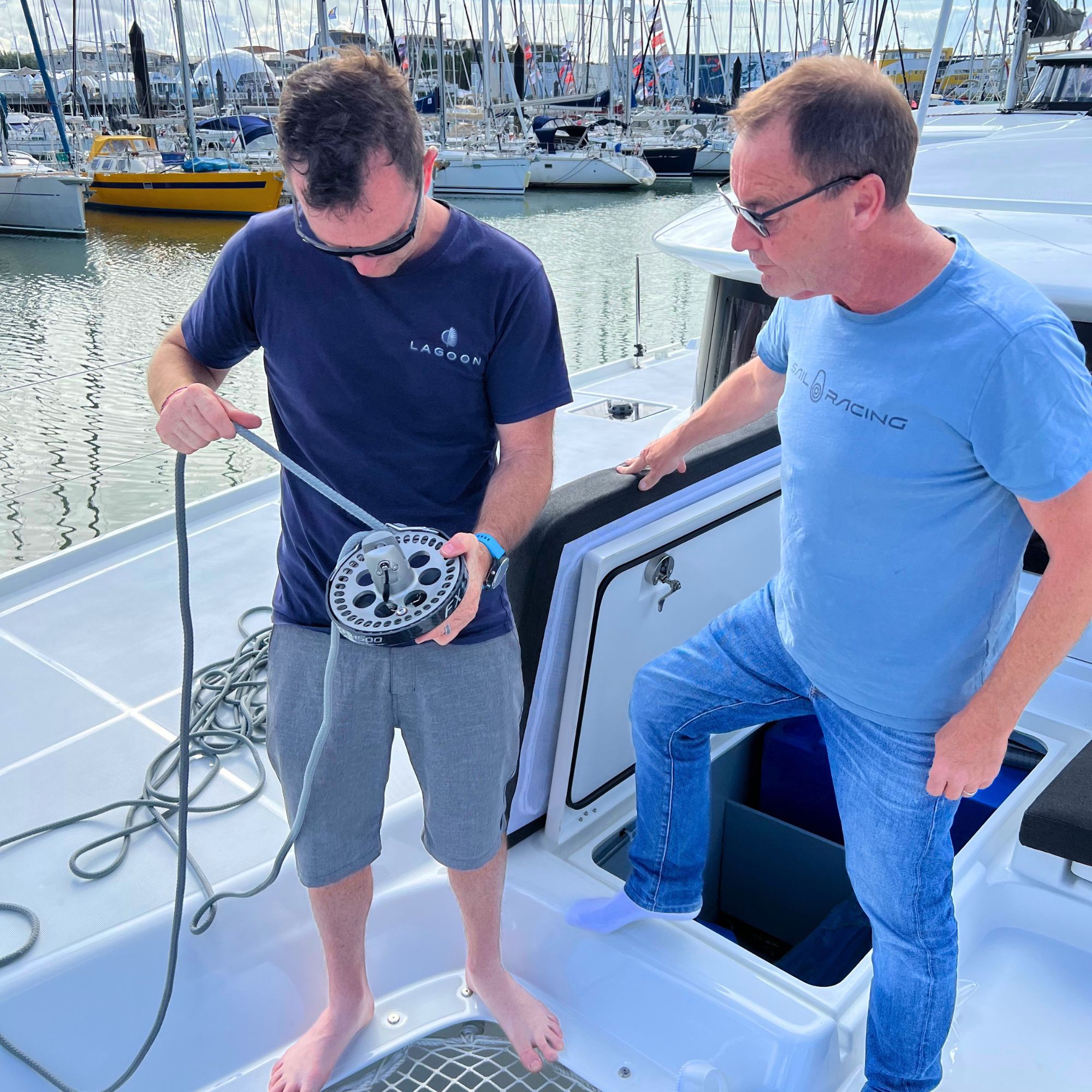
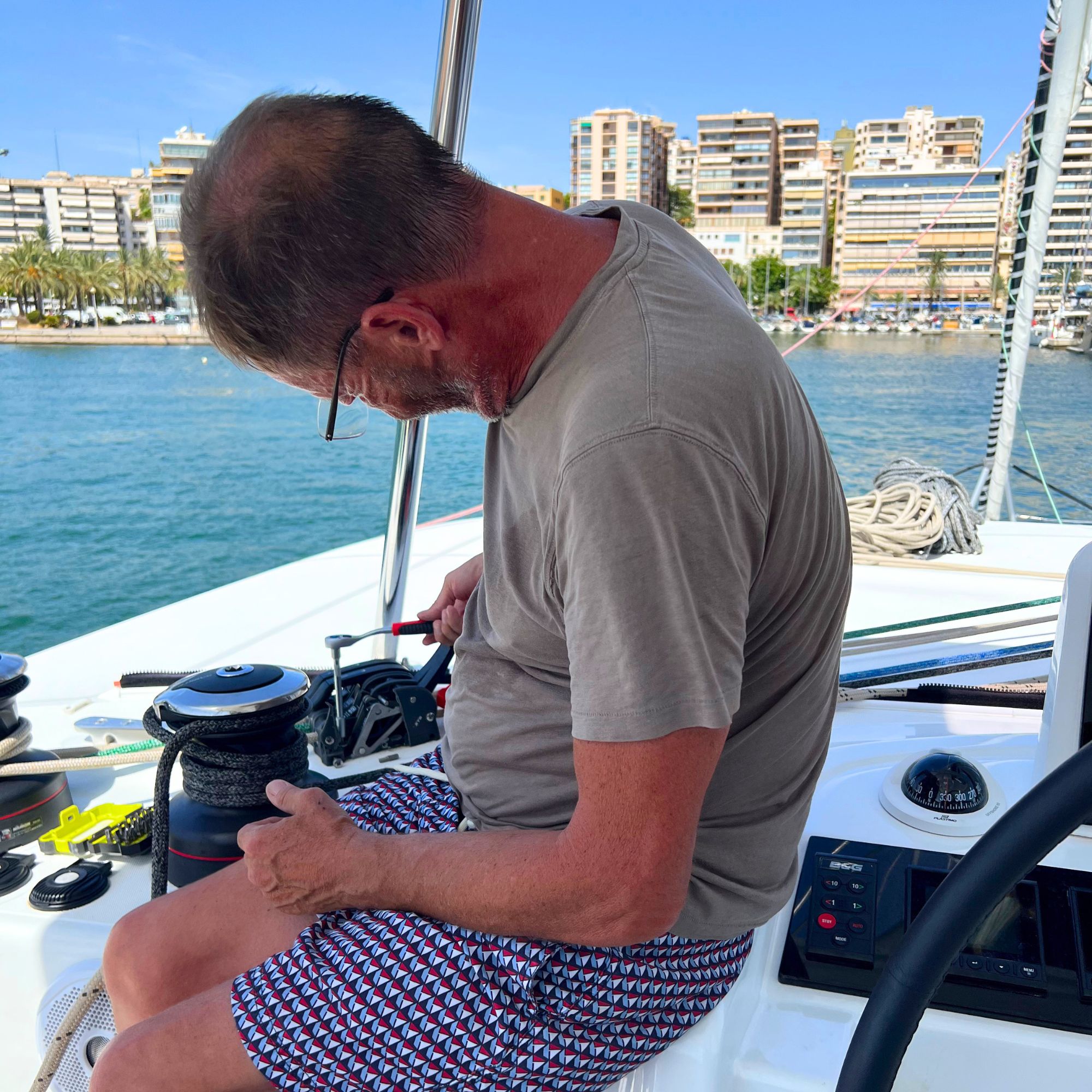
Mike and Linda’s experience has been much more gradual. When something needs attention, they’ll research it, learn more about the system and determine whether it’s something they can tackle themselves.
Each job adds another skill.
Over time, that knowledge compounds, and jobs that might once have seemed intimidating become simply another part of maintaining the yacht.
For anyone considering long-term cruising, learning the fundamentals of yacht maintenance can give you greater independence and a much better understanding of the boat you’re relying on.
The Best Cruising Tip: Push Yourself
Perhaps the most valuable lesson Mike and Linda have learned after four seasons has little to do with any individual sailing technique.
It’s being prepared to step outside your comfort zone.
Mediterranean mooring once felt confronting. Overnight passages required confidence they hadn’t yet developed. Yacht maintenance involved systems they didn’t initially understand.
Now, many of those things are simply part of their normal cruising routine.
That doesn’t mean taking unnecessary risks. It means learning, preparing, asking for advice and then giving yourself the opportunity to put those new skills into practice.
As Mike and Linda have discovered, the more capable they become, the more freedom they have to explore.
And ultimately, that’s what Mediterranean cruising is about.
You don’t need to know everything before you leave. Every anchorage, passage, maintenance job and challenging manoeuvre teaches you something new. Four seasons later, Mike and Linda are still learning, still improving and still discovering new ways to get more from their Lagoon 46.
Their experience is proof that some of the best catamaran sailing tips can’t simply be read. You have to get out there and experience them for yourself.
Catamaran Sailing Tips: Frequently Asked Questions
Is a Lagoon 46 suitable for a couple to sail?
Mike and Linda chose their Lagoon 46 because they felt it was the largest yacht they were comfortable handling as a couple, while still providing enough space for their five children, family and friends to visit. After four seasons, they remain very happy with that decision. The appropriate yacht size will depend on each crew’s experience, abilities and intended use.
What is Mediterranean mooring?
Mediterranean mooring, commonly called Med mooring, is a technique frequently encountered in Mediterranean cruising areas. Mike and Linda have used the technique extensively in Greece, Croatia and Turkey, including situations where lines are taken ashore to rocks.
How long should lines be for Mediterranean mooring?
Mike and Linda originally purchased approximately 50-metre lines but found longer lines provided more flexibility. Based on their experience, they prefer floating lines of approximately 70 to 100 metres for their Lagoon 46.
Do Med mooring lines need to float?
For the technique Mike and Linda use when swimming lines ashore, they strongly recommend genuine floating line. They learned this the hard way after buying line they believed would float, only to discover that it sank and was difficult to swim ashore.
How do you become more confident with Mediterranean mooring?
Mike and Linda recommend developing a consistent process, ensuring the anchor is properly set, taking your time and refusing to be rushed by surrounding boats. Their confidence came through repetition and experience rather than trying to perfect the manoeuvre immediately.
Should you tighten your anchor after Med mooring?
A harbour master in Greece taught Mike and Linda to return to their anchor after the boat had been settled for around an hour and add some tension with the windlass. It’s a technique they’ve since incorporated into their own routine.
What are Mike and Linda’s top overnight sailing tips?
For overnight sailing, they prefer passages with some moonlight where circumstances allow. They also put a reef in before sunset, accepting slightly slower performance in exchange for greater peace of mind overnight.
Is it better to reef before dark when sailing overnight?
Mike and Linda choose to reef before sundown on overnight passages. This is their personal approach based on their cruising experience and means they begin the night with a more conservative sail configuration rather than waiting for conditions to change after dark.
What are the best weather apps for Mediterranean sailing?
Mike and Linda compare several forecasts rather than relying on a single weather source. Their regular tools include PredictWind and Windy, alongside an additional weather source when sailing in Greece. Different sailors may prefer different forecasting services, but their key cruising tip is to compare forecasts before making passage decisions.
Is Mediterranean weather difficult to predict?
Conditions can change, and Mike and Linda have found this particularly important while sailing around Greece. They regularly monitor multiple forecasts to help avoid being caught out by deteriorating conditions.
How much yacht maintenance should you learn yourself?
You don’t need to know how to fix everything before you start cruising. Mike and Linda gradually developed their yacht maintenance skills through experience. Mike progressed from never imagining he’d service the generator to replacing its water pump himself.
Do things break frequently when living aboard a yacht?
A yacht contains many systems and moving components that are regularly exposed to demanding conditions. Mike and Linda have learned that maintenance and component replacement are a normal part of using a yacht extensively, and don’t necessarily indicate poor manufacturing.
What should you consider when choosing a catamaran for Mediterranean cruising?
Consider how many people will normally be onboard, whether you’ll sail predominantly as a couple, your experience level, the amount of entertaining space you need and the size of yacht you’re comfortable handling. Mike and Linda ultimately chose the Lagoon 46 because it provided the balance of space, sailing performance and manageability they were looking for.
Is the Lagoon 46 good for entertaining?
From Mike and Linda’s experience, yes. They particularly value the Lagoon 46’s separate entertaining spaces, including the flybridge, saloon and aft cockpit. This allows them to have around eight people onboard without everyone feeling crowded.
What is the most important lesson for new catamaran sailors?
Don’t expect to know everything immediately. Mike and Linda’s experience shows that confidence comes from continually learning, practising new skills and gradually stepping outside your comfort zone. Many of the things they once found intimidating are now a routine part of sailing the Mediterranean.
LATEST LAGOON CATAMARAN REVIEWS
Why The Lagoon 43 is the Best Catamaran for Liveaboard Cruising – Long
Long, a first-time catamaran owner, spent years researching before choosing the Lagoon 43 for his global sailing adventure starting in France.
“It has fully met my expectations. The size is just right for me, spacious but manageable, and very livable. After two months and over 2,000 nautical miles of sailing, I’ve been very happy with its performance. The interior layout, saloon design, semi flybridge, and included configurations perfectly suit my family’s lifestyle and the way we entertain friends on board.
If what you really want is a valuable, challenging, and rewarding life experience, then absolutely go for it. This kind of journey is absolutely worth it.”
Lagoon Catamaran Charter Boat Investment Journey – Mike
Six years after purchasing a Lagoon 40 for charter in the Whitsundays, Mike reflects on the decision that exceeded expectations.
“We approached the charter boat investment with a business mindset. We modelled everything conservatively, and honestly, it’s performed better than expected. Even through COVID, we averaged around 165 charter nights a year, and the boat held its value far better than we’d anticipated.
The Lagoon 40 hit the sweet spot, it’s the perfect size for the Whitsundays market. Less intimidating for first-timers, and a strong performer in bookings.
The boat was delivered basically ready to charter.
After six years, I’d absolutely do it all again. It’s been a positive experience from start to finish, and if we go again I’d be looking at the Lagoon 43.”
⋆⋆⋆⋆⋆
Lagoon 46 Favourite Features Real Owner Testimonial – Mike and Linda
After 2 seasons of sailing the Med on their Lagoon 46 Mike and Linda shared what they love most, “The Lagoon 46 has given us a whole new level of freedom and comfort. I love the Code Zero sail for light wind performance, and Linda’s favourite spot is the flybridge, it’s where everyone gathers when we’re sailing. With a watermaker and generator on board, we’ve been able to explore more remote places and stay cool during the heatwaves in Greece. It’s made the whole experience effortless and enjoyable.”
⋆⋆⋆⋆⋆